
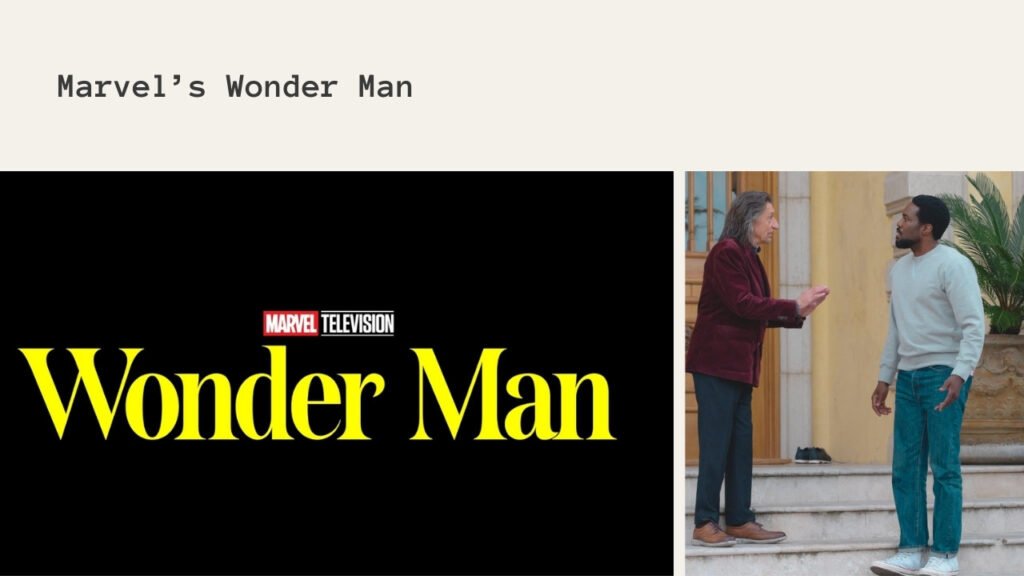
Marvel’s first project of 2026 isn’t a multiverse epic, a cosmic crisis, or another setup for Avengers: Doomsday. Instead, the studio has opened the year with its most modest experiment in years: Wonder Man, an eight-episode Hollywood satire housed under the Marvel Spotlight banner and premiering on Disney+.
Spotlight is Marvel’s attempt to strip away continuity constraints and phase-mapping in favor of grounded, character-first storytelling. After Echo tested the initiative in 2024, Wonder Man now carries the burden of proving that Marvel can still make TV without turning every episode into a trailer for the next crossover.
And at a moment when the studio has struggled with creative overload, box office fatigue, and a crisis of cultural influence, the gamble feels deliberate.
The Hollywood Meta That Arrived Late to Hollywood Meta
Originally completed before the 2023 writers and actors strikes, Wonder Man sat dormant for more than a year as Marvel restructured its TV pipeline and pulled back on volume. That break proved costly in one respect: between completion and release, HBO’s The Franchise and Apple TV’s Emmy-winning The Studio, both centered on the absurdity of moviemaking, beat Wonder Man to the punch.
Its novelty may be diminished, but its timing remains curious. With Warner Bros. and Marvel set to collide in December when Avengers: Doomsday and Dune: Part Three launch on the same day, a battle already nicknamed “Dunesday,” Marvel needed a tonal reset.
Wonder Man is that reset: no universe at stake, no temporal ruptures, no Kang variants. Just an actor, an industry, and a running commentary on the business of superheroes in a superhero-saturated culture.
Meet Simon Williams: A Superhero Who Wants to Become a Movie Star
Simon Williams isn’t a household Marvel name, even among fans. Created by Destin Daniel Cretton and Andrew Guest, the series updates Simon as a struggling actor (played by Yahya Abdul-Mateen II) desperate to land a breakout role while concealing his ability to bench-press cars and survive explosions.
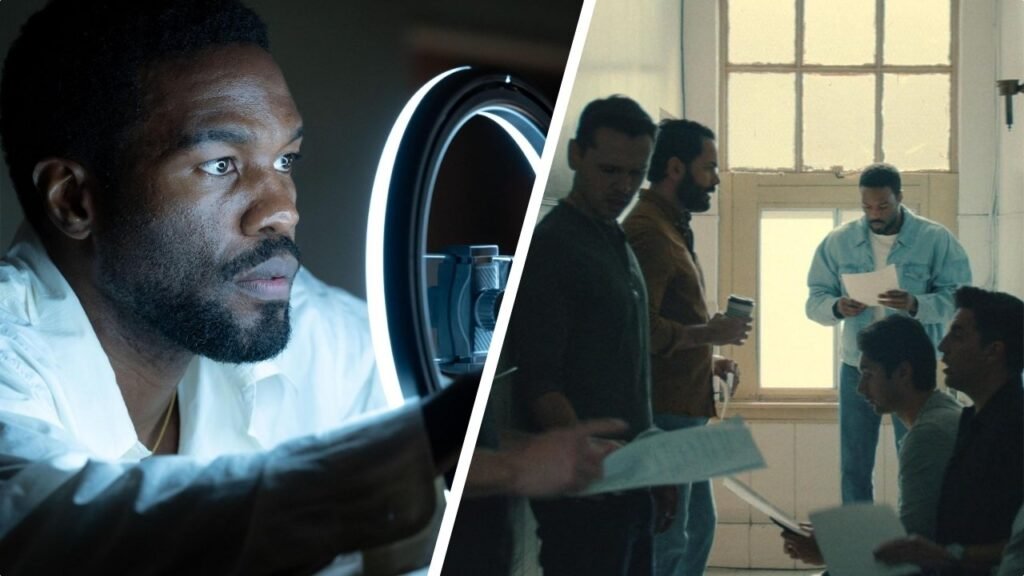
In the comics, Simon was a villain-turned-hero whose double life as an Avenger and stunt performer eventually defined him. Here, the acting comes first, and it’s messy. Simon self-sabotages in auditions, critiques scripts like an MFA purist, and buckles under the pressure of a showbiz ecosystem that demands charm, marketability, and compliance. His superpowers, illegal within the entertainment sector thanks to a hilariously bureaucratic ordinance, don’t make life easier.
If anything, they give him one more thing to panic about. This is where Wonder Man differentiates itself: it doesn’t treat Simon’s abilities as destiny. They’re just another burden in a town filled with failed dreams and inflated egos.
The Trevor Slattery Comeback Nobody Expected (Except Marvel)
If Simon is the entry point, Trevor Slattery is the chaos engine. Ben Kingsley returns over a decade after Iron Man 3 turned Trevor into the MCU’s strangest commentary on terrorism, acting, and racial caricature. His tenure since then, interrupted by prison time, theatrical reinvention, and an improbable rescue by the real Ten Rings in Shang-Chi, finally circles back to Hollywood.
Trevor, once the Mandarin and now a disgraced icon, becomes Simon’s mentor of sorts. Their dynamic gives the series its comedy and texture, and it’s easy to see why Marvel’s creative teams eventually merged two separate pitches. One Trevor-focused, one Simon-focused, into a buddy dramedy about failure, reinvention, and the delusion required to survive the industry.
A Return to Form? Sort Of.
The most surprising thing about Wonder Man is that it doesn’t try to escape television. It embraces it. The show feels closer to Atlanta or The Studio than it does to Loki or Secret Invasion, with scenes that prioritize cringe, humor, and grounded tension over spectacle. It’s been described as a “prestige-adjacent” Marvel series, small, self-contained, stylish, and occasionally abrasive.

Is it the project that saves Marvel? Probably not. But it is the first in a while that seems uninterested in saving Marvel at all, and that may be why critics have responded so enthusiastically. Early reviews have landed at a strong 90+ percent on Rotten Tomatoes, praising the series for leaning into what Marvel abandoned when it chased crossover synergy at the expense of authorship.
Why Wonder Man Matters– Even If It Doesn’t Become a Phenomenon
Even if Wonder Man isn’t engineered to dominate the cultural calendar, its existence signals a shift:
- Marvel is experimenting again
- Humor isn’t just quippage, it’s thematic
- Characters are allowed to fail in ways that don’t require beams of light in the sky
- The studio finally seems open to telling stories that don’t demand homework
For longtime MCU watchers, that alone is refreshing. For Marvel itself, it’s strategic: a pressure release valve before the studio’s biggest theatrical gambit since Endgame hits theaters this winter.
Whether Wonder Man becomes a cult favorite, a modest success, or a forgotten sidebar, it might be remembered as the strange little dramedy that forced Marvel to rethink television and reminded audiences that the MCU doesn’t always need the universe to matter.
