
The FRASENAISSANCE isn’t just about nostalgia, it’s about reinvention. Since his Oscar-winning turn in The Whale, Brendan Fraser has leaned into roles that examine isolation, regret, and the fragile human need for connection. Rental Family, now streaming, continues that streak, and while it doesn’t fully excavate its provocative premise, it offers something quietly resonant and unexpectedly intimate.
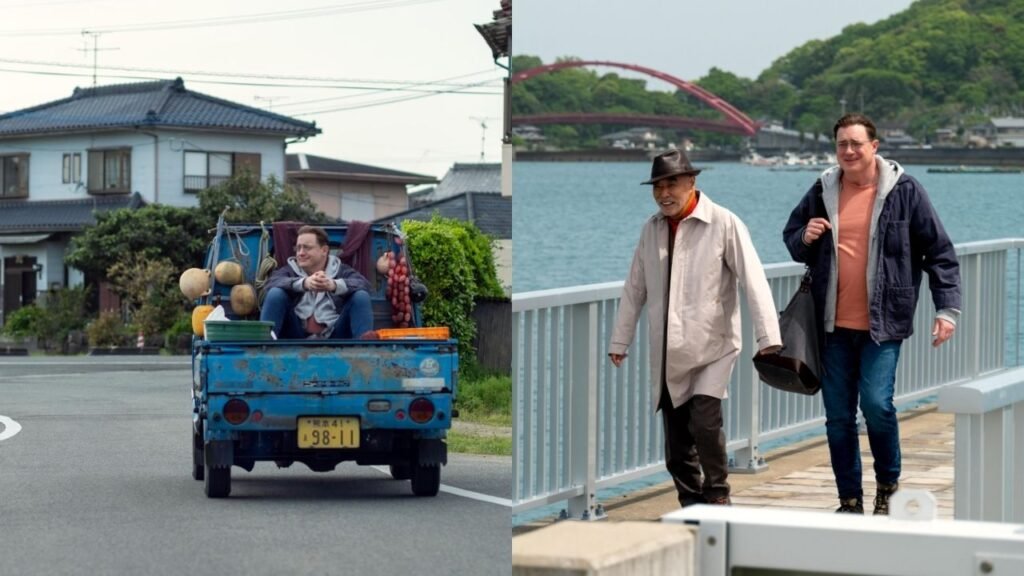
Directed and co-written by Hikari, the film is rooted in a real phenomenon in Japan: agencies that rent actors to fill roles in people’s personal lives. Wedding guests. Substitute spouses. Stand-in family members. It’s an industry built on illusion and emotional necessity.
A Man Paid to Belong
Fraser plays Phillip VanderPloeg, a struggling American actor adrift in Tokyo. His career is stagnant, his apartment is claustrophobic, and his sense of purpose is evaporating. He auditions for absurd commercial gigs (including a stint as a foam tree and a giant rubber tooth), then spends his evenings drinking alone and watching families across the street through his window, a silent reminder of what he doesn’t have.
That longing becomes literal when he’s hired by “Rental Family,” a company run by Shinji (Takehiro Hira). Phillip’s assignments range from playing a grieving funeral guest to filling in as a wedding groom so a bride can stage a traditional ceremony before quietly leaving for a new life abroad.
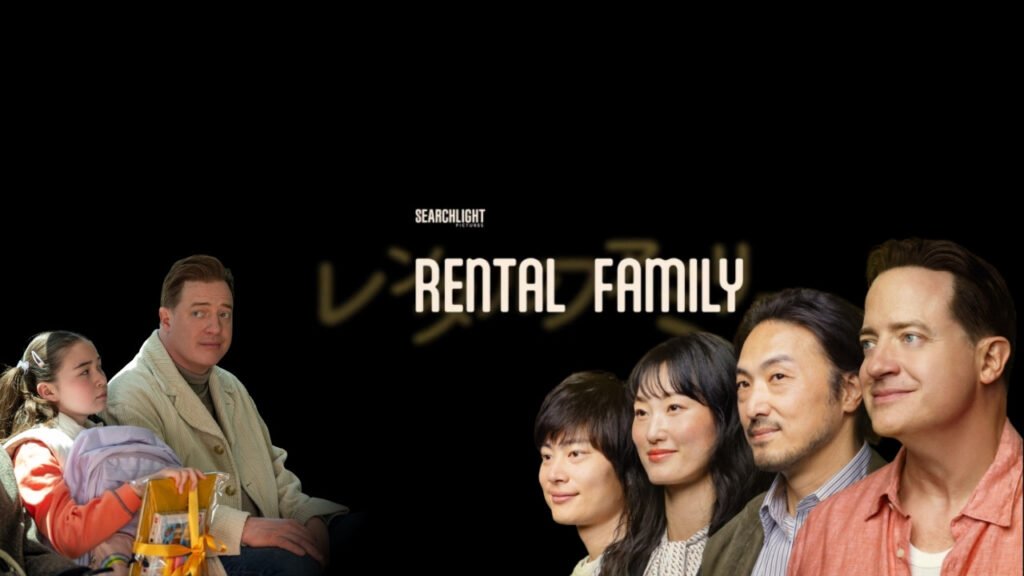
But the emotional stakes escalate when he’s hired by single mother Hitomi to pose as the estranged father of her young daughter, Mia, so the girl can gain admission to an elite school. When Mia makes him promise he’ll “never leave again,” the line lands like a quiet thunderclap.
Phillip is no longer just pretending; he’s becoming what he’s paid to simulate.
Acting as Emotional Labor
The film’s most compelling idea is deceptively simple: if acting is “just lying,” what happens when the lie heals someone?
Phillip’s work exposes the tension between authenticity and performance. Japanese society’s emphasis on maintaining appearances, on “saving face”, is woven into the narrative, from staged funerals for the living to elaborate weddings performed for parental approval. The deception isn’t malicious; it’s social lubrication. It’s survival.
Yet Phillip, an outsider in a culture that prizes harmony, becomes both participant and mirror. His foreignness makes him useful, a “token white guy,” as Shinji bluntly describes, but it also underscores his displacement. He’s literally paid to belong in spaces where he otherwise wouldn’t.
And because he’s lonely too, the emotional boundaries inevitably blur.
The Father Figure and the Forgotten Self
One of the film’s most affecting subplots involves Kikuo, an aging former actor battling memory loss. Phillip is hired to interview him as part of a fabricated journalistic project meant to lift the old man’s spirits. What begins as another transactional gig slowly morphs into something tender: a surrogate father-son dynamic between two performers grappling with identity.
For Kikuo, fading memory means fading self. For Phillip, playing roles for others has hollowed out his own sense of who he is.
It’s here that Hikari’s direction becomes most evocative, lingering on small gestures, hesitant smiles, and the unspoken ache in Fraser’s eyes. The film brushes against existential questions about legacy, masculinity, and emotional inheritance. It doesn’t fully dissect them, but it lets them linger.
A Love Letter– With Reservations
Critically, Rental Family has been embraced. It holds an 87% critics score and 96% audience score on Rotten Tomatoes, while USA Today awarded it three-and-a-half stars and ranked it among the year’s best. Fraser described the film as “a love letter to Japan” in an interview with Extra.
And in many ways, it is. Tokyo is captured not just as a neon metropolis, but as a dense emotional ecosystem, cramped apartments, crowded buses, and karaoke bars filled with performative joy. Phillip’s large physical presence in tight urban spaces becomes a visual metaphor for emotional misfit.
Yet the film stops short of interrogating its boldest ideas. The systemic pressures faced by women. The rigid expectations of family and reputation. The commodification of intimacy. Hikari introduces these themes but rarely pushes them into uncomfortable territory. Instead, the movie opts for accessible sentiment.
Fortunately, Fraser’s performance gives that sentiment weight.
Fraser, Fully Human
If Rental Family works, it’s because Fraser refuses to play Phillip as pathetic. He’s sad, yes, but also hopeful. Awkward, but deeply empathetic. His wide-eyed sincerity anchors every scene, especially opposite young Mia and Mari Yamamoto’s Aiko, whose complicated professional dynamic with Phillip hints at a richer story just beneath the surface.
Fraser doesn’t oversell the emotion. He lets it simmer. In a film about pretending, his authenticity is the anchor.
The Bigger Picture: From Oscar to Mummy
Between this intimate character study and the reported reunion with Rachel Weisz in the next installment of The Mummy franchise set for 2028, Fraser is threading an intriguing needle. He’s balancing blockbuster legacy with vulnerable, internationally minded storytelling.
Rental Family may not be as transformative as The Whale, but it reinforces why audiences have re-embraced him: he makes emotional fragility feel powerful.
How to Watch Brendan Fraser’s Rental Family?
Rental Family is now streaming on Hulu in the United States, available across all subscription tiers, including bundles.
It’s also available to purchase digitally for $19.99 on Amazon Prime Video, Apple TV, and Fandango At Home. There is currently no rental option.
Final Verdict: Stream It
Rental Family doesn’t fully explore the philosophical minefield it sets up, but it doesn’t need to be revolutionary to be moving. It’s a tender meditation on loneliness, cultural displacement, and the strange comfort of borrowed belonging.
And at its center is Brendan Fraser, reminding us that sometimes the most powerful performances aren’t the loudest ones, they’re the ones that quietly ask to be seen.
