
Five years after its initial release, Greenland has quietly achieved something many mid-budget disaster films fail to do: remain relevant. The 2020 Gerard Butler–led thriller has surged into the Top 4 on FlixPatrol’s HBO Max streaming charts, signaling renewed interest just weeks ahead of the theatrical debut of its sequel, Greenland 2: Migration, in January 2026.
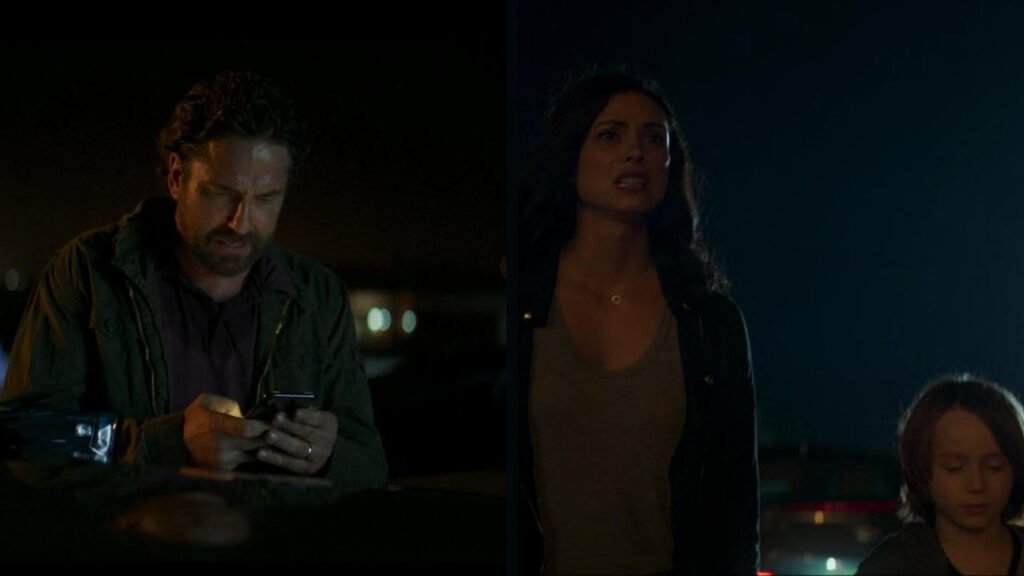
The timing is no coincidence. Streaming audiences have increasingly gravitated toward grounded, character-driven genre films, and Greenland, once overshadowed by louder blockbusters, now fits that demand far better than it did upon release.
Why Greenland Stands Apart in a Crowded Genre?
On paper, Greenland follows a familiar apocalypse framework: a civilization-ending comet, mass evacuations, and humanity scrambling for survival. But director Ric Roman Waugh approached the material differently. Rather than framing the event as a global spectacle, the film restricts its perspective almost entirely to one fractured family navigating impossible decisions in real time.
John Garrity (Gerard Butler) is not a scientist or military leader, but an ordinary engineer caught in a system that favors select survivors. His estranged relationship with Allison (Morena Baccarin) adds emotional stakes that persist even when the world itself is collapsing. The threat isn’t just extinction, it’s separation, abandonment, and moral compromise.
This approach earned the film a 77% Rotten Tomatoes Tomatometer score, a strong result for a genre often dismissed by critics. Reviewers consistently praised its restraint, tension, and emotional grounding. Many noted that Greenland avoids the triumphalist tone common to disaster films, instead presenting survival as chaotic, unfair, and frequently brutal.
Cody Dericks of Next Best Picture pointed out that the film often makes the “opposite” choice of what audiences expect from a disaster movie, resisting spectacle in favor of consequence. Ruth Marimas of FlixChatter Film Blog similarly highlighted Butler’s understated performance, calling it one of his strongest in years.
Audience Division and Long-Term Reevaluation
While critics responded positively, general audiences were more divided. The film holds a 63% audience score, with common criticisms targeting its pacing, familiar tropes, and scientific inaccuracies. Some viewers felt the story drifted too far from the comet threat during extended subplots involving medical urgency, family separation, and human conflict.
However, that very criticism points to why Greenland has aged better on streaming than it did theatrically.
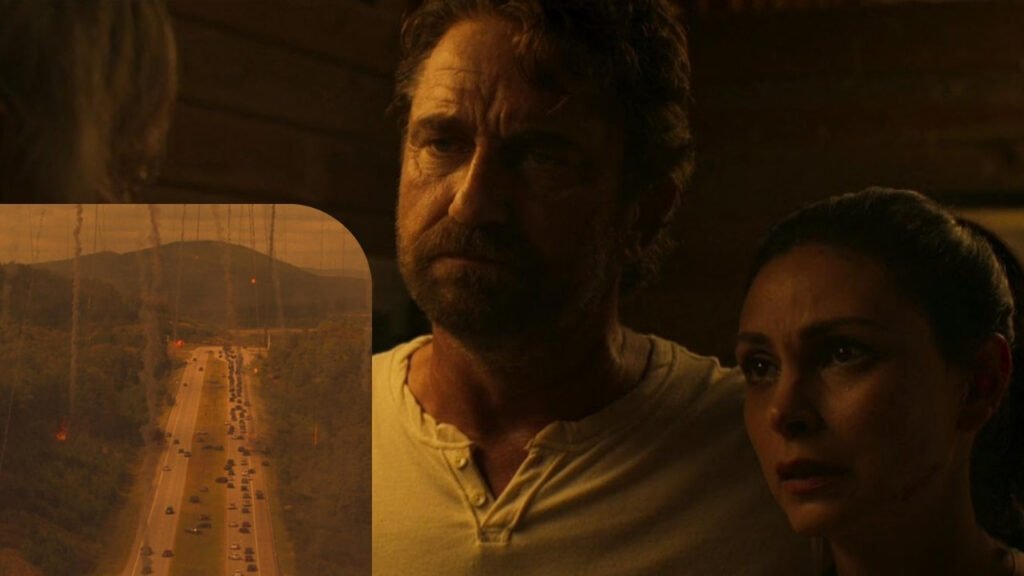
In hindsight, it’s a slower, character-focused middle act that plays more like a survival drama than a traditional disaster film. Viewers approaching the film without blockbuster expectations, especially in a streaming environment, are more receptive to its tone and priorities. As a result, Greenland now feels less like a genre retread and more like a grounded alternative to films such as Armageddon or Deep Impact.
Its recent chart performance suggests audiences are reevaluating the film on its own terms rather than comparing it to spectacle-driven predecessors.
From Cult Interest to Franchise Confidence
That reassessment directly influenced the confidence behind Greenland 2: Migration.
When the sequel entered the market, it became the largest deal of the Cannes virtual film market, with STX securing the project in a $75 million acquisition. Domestic rights were purchased for $25 million, with international rights accounting for the remaining $50 million, an unusually strong financial vote of confidence for a post-apocalyptic sequel not tied to an established mega-franchise.
The sequel once again reunites Gerard Butler, Morena Baccarin, and director Ric Roman Waugh, with writers Mitchell LaFortune and Chris Sparling returning to maintain tonal continuity. Roman Griffin Davis takes over the role of Nathan Garrity, signaling a narrative shift toward the next generation of survivors.
Expanding the World Without Losing the Core
According to the official synopsis, Greenland 2: Migration picks up after the comet’s impact, with the Garrity family forced to leave the safety of their Greenland bunker and traverse a devastated planet in search of a new home. Rather than escalating destruction, the sequel explores aftermath, displacement, and reconstruction, a natural thematic evolution.
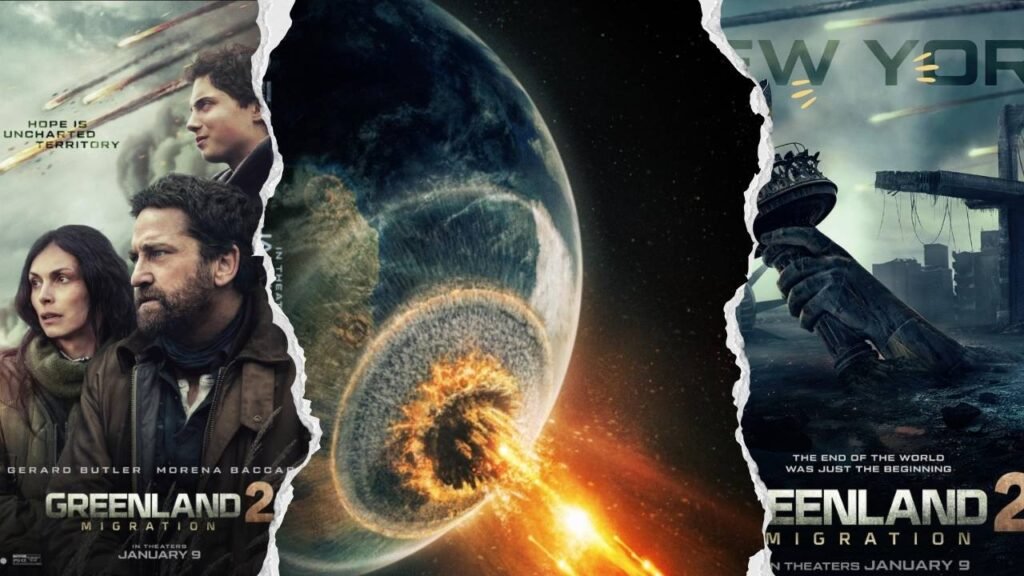
Newly released character posters reinforce this direction, depicting the core family against skies still filled with falling debris. The imagery suggests resilience rather than triumph, reinforcing the franchise’s emphasis on endurance over spectacle.
This shift positions Migration less as a traditional sequel and more as a continuation of the original film’s central question: What does survival actually cost?
Why Greenland Matters Now?
Greenland’s resurgence highlights a broader trend in streaming-era consumption. Films that may have underperformed or polarized audiences during their theatrical runs can find second lives when viewed without hype-driven expectations.
As audiences revisit the original ahead of the sequel’s January 9, 2026, theatrical release, the film’s success suggests that disaster stories grounded in realism, moral complexity, and emotional vulnerability still resonate perhaps more now than ever.
Whether Greenland 2: Migration expands that legacy or simply builds upon it, one thing is clear: Greenland is no longer just another disaster movie. It’s a reminder that sometimes, the quiet end-of-the-world stories are the ones that last.
