
Paramount+ didn’t wait for critics or fan discourse to settle before locking in a Season 3 of Landman. The streamer already knew what the numbers said: more than 9.2 million viewers tuned in during the first 48 hours of Season 2’s premiere, a record for the platform and a shock even for a Taylor Sheridan vehicle.
The series quickly climbed Nielsen’s streaming charts and became one of Paramount’s top two original titles in late 2025. Season 2 cemented that Landman isn’t just a companion piece for Yellowstone fans; it’s a standalone hit with its own gravitational pull.
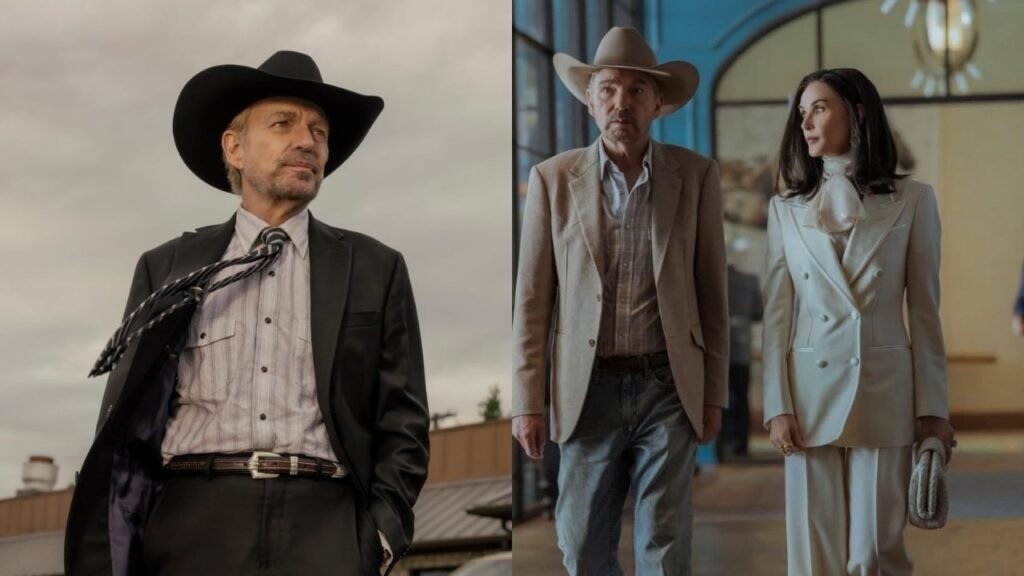
The renewal also arrived amid rumors that Sheridan’s jump to NBCUniversal might disrupt his Paramount slate. Co-creator and showrunner Christian Wallace put that speculation to rest, insisting the creative blueprint remains unchanged and that the story has “a lot of runway left.”
For a show that has barely scratched the edges of Texas’s oil economy, that might be an understatement.
Tommy’s Downfall and Reinvention
Season 2’s most dramatic swing was Demi Moore’s Cami Miller firing Billy Bob Thornton’s Tommy Norris, a corporate assassination that instantly rewired the show’s power map. The move wasn’t impulsive; it was the culmination of a season-long clash over whether to rebuild M-Tex Oil’s offshore natural gas rig. Tommy saw volatility and risk; Cami saw opportunity, leverage, and legacy.
In Cami’s mind, a company president can’t be squeamish about the very commodity that built the company’s fortune. That single line, delivered without hesitation, turned the firing into a thesis statement.
But Sheridan rarely leaves his protagonists stranded. Tommy responded not as a disgraced executive, but as a man with old-school instincts for survival. Instead of returning home in defeat, he built a rival outfit, CTT Oil Exploration & Cattl,e and persuaded cartel figure Gallino (Andy García) to buy in as a financial partner.
The alliance has the smell of a long-play Sheridan loves: part business maneuver, part blood pact, part reckless gamble, and entirely combustible. Season 3 now sets up the kind of corporate rivalry that feels both contemporary and medieval, where contracts replace cattle brands, and capital replaces land.
Cami’s Ascension Is the Series’ Sharpest Left Turn
Monty’s death in Season 1 was more than a shock twist; it was the series’ accelerant. Moore steps into Season 3 as a woman who never asked for a kingdom but learned quickly how to rule one. The boomtowns of West Texas don’t tolerate hesitation, and Cami shows none.
Her consolidation of power over M-Tex instantly reframes her as one of Sheridan’s most intriguing characters: a female lead who operates not from the margins of male power, but from its center.

That distinction matters. Sheridan’s worlds are traditionally dominated by men who wield force, money, or land. Cami wields strategy. She doesn’t need a gunfight; she needs a boardroom, a contract, and an oil lease.
Her battle with Tommy isn’t just a collision of personalities; it’s a philosophical clash about how the modern oil industry survives a century-old identity crisis.
The Oil Boom Isn’t Just Business– It’s the New Western
Wallace has spoken openly about why the story works: Texas oil country is still a modern frontier. Fortunes rise and collapse fast, stakes spill across families, and the line between legality and outlaw economics is perpetually thin.
When Landman shows M-Tex betting big on offshore rigs, or Tommy poaching talent for CTT, it isn’t overdramatizing; if anything, reality is wilder.
Sheridan leans into that texture. The series captures an era when American energy isn’t just a commodity but a battlefield for money, political influence, and reputation. Season 3 will inevitably explore how two oil empires, one polished, one improvised, collide when the same wells, workers, and contracts are suddenly in play.
The Norris Family Becomes the Moral Compass
Cooper (Jacob Lofland) and Ariana (Paulina Chávez) provided one of Season 2’s most harrowing arcs. Ariana’s assault and Cooper’s violent retaliation forced the series to confront how justice works or fails when gender, class, and small-town law enforcement intersect.
When the attacker dies of a heart attack after the altercation, the town’s instinct is to blame the young man defending the victim. It takes intervention from Rebecca Falcone (Kayla Wallace), who warns the police that charging Cooper would ignite a bigger fire than they’re prepared to contain.
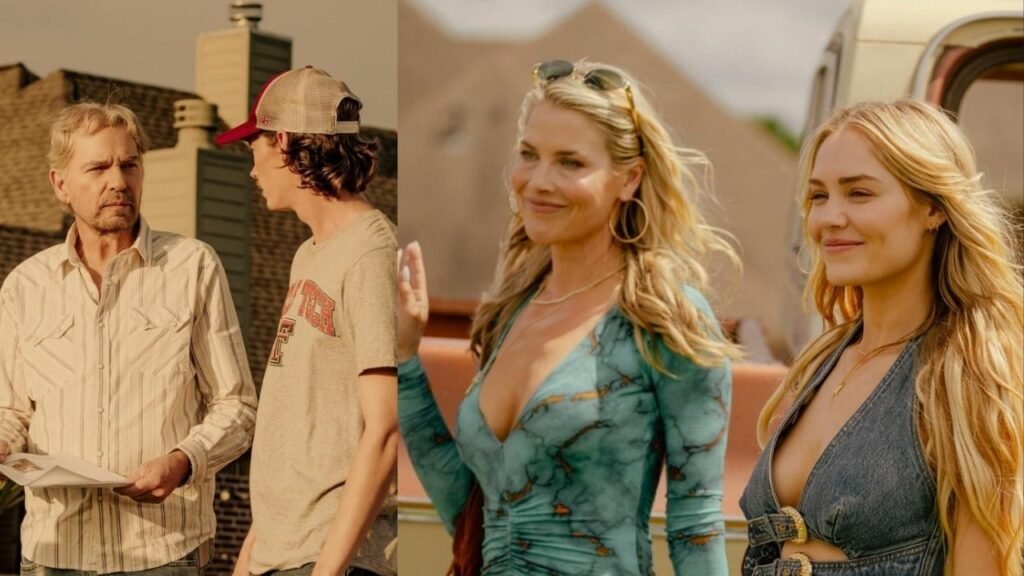
Chávez has said Ariana won’t let the assault define her, which suggests Sheridan intends to explore the aftermath, not the trauma itself. For Cooper, the incident doubled as an initiation, a moment when the family’s instinct for protection overrides any concern for optics.
It’s the purest distillation of the show’s thesis: in West Texas, survival isn’t noble, it’s brutal, and the system rarely protects the right people.
Ainsley Keeps Evolving– Even When Viewers Hate Her
Michelle Randolph’s Ainsley remains polarizing, which is exactly why she works. Sheridan doesn’t care whether audiences adore or despise his characters; he cares whether they feel real. Ainsley’s mistakes, pettiness, and self-discovery make sense for a girl still assembling a worldview.
Randolph has spoken about playing her as someone inexperienced, not unintelligent, and the distinction becomes clearer with each episode. Season 3 nudges her closer to adulthood, college life, and independence, a stark contrast to the oil feuds pulling her family into greater danger.
The Rebecca Factor: The Question of Casting and Continuity
Kayla Wallace’s Rebecca may be Season 3’s most underrated variable. Once a lone-wolf operator with questionable loyalty, she’s slowly absorbed into the M-Tex family. Wallace has teased that cracks in Rebecca’s personality will widen, and that her elevated role at M-Tex will force her to test herself against corporate pressure.
The interesting part isn’t whether she succeeds, it’s whether she still recognizes herself when she does. Also, despite rumor mills suggesting Billy Bob Thornton was leaving the series, the actor shut that down, calling the speculation “AI nonsense.”
He’s committed to returning, and filming is expected to begin in spring. Demi Moore, Ali Larter, Andy García, Sam Elliott, Jacob Lofland, Paulina Chávez, and Michelle Randolph are all expected to be back, with several recurring players potentially returning depending on Season 2’s fallout.
What Season 3 Actually Looks Like?
If Season 1 introduced the oil world and Season 2 blew it up, Season 3 looks poised to institutionalize conflict. CTT vs. M-Tex isn’t just a rivalry; it’s a race to control the narrative of Texas oil in the 21st century. Tommy operates with grit and muscle; Cami operates with infrastructure and legitimacy. Sheridan loves stories where both sides are right, both sides are wrong, and only the audience knows how much each has to lose.
With shooting likely to happen through 2026, a late-year release is the most plausible drop window. And the real trick is that Sheridan hasn’t even reached the heart of the oil story yet: the geopolitics, the international players, the environmental pressures, the cartel economics, the banking side, and the generational shift that could topple the old guard.
There’s a runway– Wallace wasn’t bluffing.
