Trailers used to sell anticipation. That was the old deal. A quick preview, a few striking shots, maybe one memorable line, then audiences waited for the actual release to decide what they thought. The movie arrived first. Judgment came later.
Except… that’s not how it works anymore. Now the trailer often is the first release.
Before critics publish reviews, before opening weekend numbers, before anyone has seen the full story, millions of people are already forming opinions from two carefully edited minutes. They decide whether something looks exciting, embarrassing, overhyped, tired, bold, cheap, emotional, or destined to flop. Sometimes within seconds.
And once that first impression lands, it spreads fast.
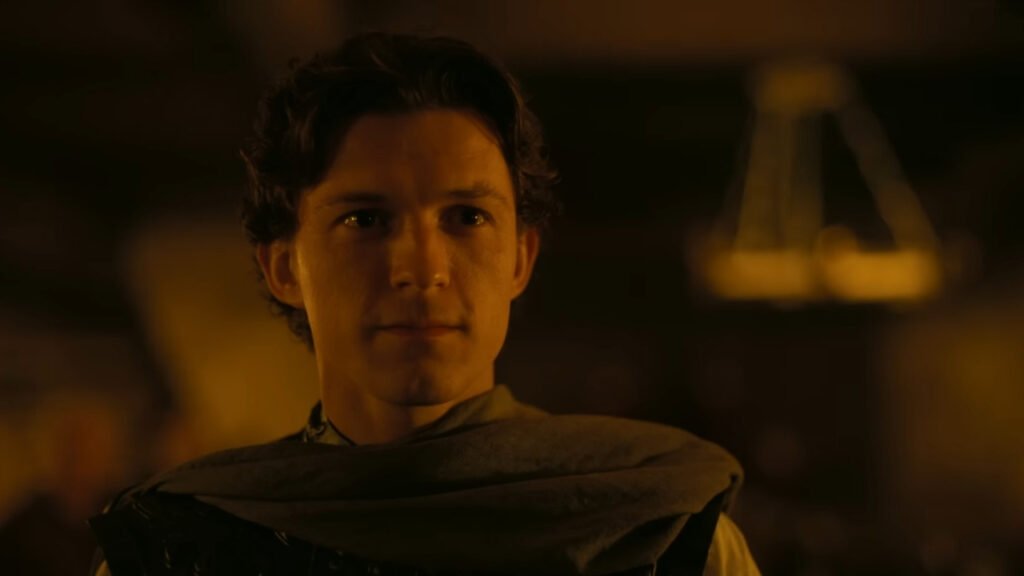
A single awkward line reading becomes a meme. One stunning visual becomes proof the film is “back.” A nostalgic music cue can trigger instant goodwill. Weak CGI can dominate headlines for days. Entire narratives are built from fragments, reaction videos, quote tweets, TikTok edits, Reddit threads, fan arguments, doom posts, hype posts, repeat.
By the time the full project arrives, public perception may already be half-written.
That is what makes trailers far more than marketing tools now. They are reputation engines. They don’t just advertise a product, they shape the emotional climate around it.
They can rescue a doubted project, damage a promising one, reignite franchise interest, or create expectations no final film could realistically satisfy. And here’s the uncomfortable part: trailers are designed to do exactly that.
Every frame is selected. Every beat is calculated. Every reveal is timed. Music is chosen to manufacture feeling. Dialogue snippets are arranged to imply momentum, chemistry, stakes, humor, prestige, whatever needs selling most. What looks like a simple preview is often a precision-built perception machine.
Which means modern audiences aren’t just watching trailers. They’re watching the first battle for the story’s reputation.
The Trailer That Saved a Project
Sometimes a project enters the public eye already wounded.
Maybe the casting was mocked. Maybe the franchise looked exhausted. Maybe leaked set photos sparked panic. Maybe the internet had already decided it would fail before a single official scene was released. In modern pop culture, skepticism can arrive absurdly early. And once it does, it spreads fast.
That is where the trailer can become rescue machinery.
A strong trailer has one job in these moments: interrupt the narrative. It needs to replace “this looks doomed” with something far more valuable,“wait… this might actually work.”
That shift matters more than people admit. Curiosity is often the first victory. Audiences do not need to be fully convinced immediately.
They just need enough intrigue to stop mocking and start watching. We’ve seen it happen repeatedly. Take Sonic the Hedgehog (2020). The first trailer became a cautionary tale. The character design was ridiculed across the internet, with criticism so loud it overshadowed everything else. Many assumed the film was dead on arrival.
Paramount delayed the release, redesigned Sonic, and launched a new trailer. Suddenly the conversation changed. Instead of mocking the project, audiences praised the studio for listening and began treating the film as a potential crowd-pleaser.
What looked like disaster turned into goodwill, and the movie became a box-office success.
Then there is Top Gun: Maverick (2022), a film that could easily have been dismissed as nostalgia recycling. Legacy sequels often arrive with suspicion: too late, too cynical, too dependent on memories.
But the trailers sold something smarter. They emphasized real aerial spectacle, emotional legacy, practical scale, and Tom Cruise’s commitment to theatrical blockbuster craft. Instead of “Why are they making this?” the conversation became “This actually looks incredible.” By release, anticipation had replaced doubt entirely.
The Batman (2022) faced its own skepticism early on. Robert Pattinson’s casting triggered predictable internet complaints from people still stuck in old franchise perceptions. Some questioned whether another Batman reboot was necessary at all.
Then the trailers arrived, dark, violent, moody, confident, with a clear detective-noir identity. Pattinson’s presence suddenly made sense within that world. What had been mocked became one of the most anticipated comic-book films of the year.
Even television has seen the effect. Andor launched with far less mainstream hype than larger Star Wars titles. There was franchise fatigue, and many viewers assumed it would be another spin-off stretched thin. But trailers positioned it differently: grounded, political, mature, visually serious.
They sold tone over nostalgia. Curiosity grew because it looked unlike what audiences expected from the brand. The pattern is consistent.
A trailer can save a project when it offers three things skeptics were missing: confidence, identity, and surprise. Confidence says the creators know what they’re making. Identity says this has a reason to exist. Surprise says your earlier assumptions may have been wrong.
And once audiences sense those three ingredients, backlash can soften remarkably fast.
Of course, trailers cannot save everything forever. If the final product disappoints, goodwill evaporates. But in the pre-release phase, momentum is everything. Sometimes all it takes is two well-cut minutes to turn a punchline into a must-watch.
The Trailer That Damaged a Project
If trailers can revive confidence, they can just as easily sabotage it. That is the brutal reality of modern marketing.
A project can spend years in development, millions in production, and endless hours polishing the final release, only for one poorly received trailer to drag the conversation sideways in a single afternoon. Because audiences no longer see trailers as previews. They see them as proof.
If it looks bad now, many assume it is bad.
And once that reaction starts, the internet rarely shows mercy. Sometimes the issue is visual credibility. When the first Cats (2019) trailer arrived, public discussion was swallowed by the uncanny digital character designs.
Instead of talking about cast prestige or the stage phenomenon behind it, viewers focused on how strange and uncomfortable the visuals felt. The film became an online joke almost immediately, and that stigma never truly left.
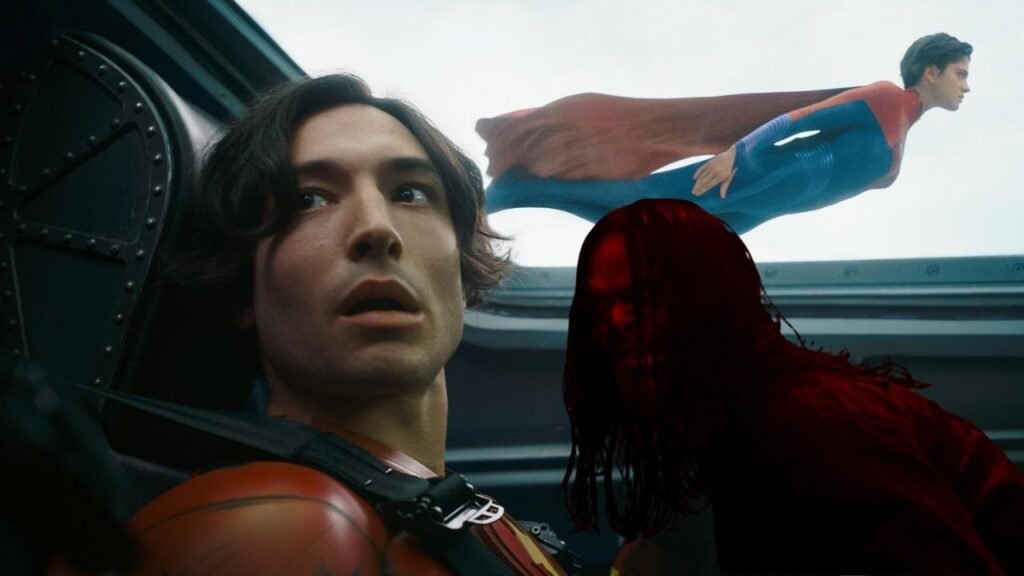
A similar problem hit The Flash (2023), where several trailer moments drew criticism for inconsistent CGI and unfinished-looking effects. Fair or not, audiences increasingly equate visual polish with overall quality.
If major blockbuster footage looks weightless or artificial, skepticism spreads fast. It stops being “maybe the effects will improve” and becomes “they’re in trouble.”
Sometimes the damage comes from tone rather than visuals. Take Joker: Folie à Deux reactions when musical elements became clearer in promotional material. Some viewers were intrigued, but others who expected a darker psychological sequel reacted with confusion.
When trailers reveal a tonal direction that clashes with what audiences imagined, division can begin before release. Then there is the problem of identity collapse, when a trailer feels like it is selling everything and nothing at once.
Morbius (2022) is a strong example. Its trailers leaned on vague seriousness, disconnected universe teases, familiar comic-book imagery, and a sense of manufactured importance without a compelling hook. Instead of excitement, many viewers responded with indifference or irony. By release, the film had already become meme material.
Indiana Jones and the Dial of Destiny faced a different version of this issue. The trailers were not disastrous, but they struggled to create urgency beyond nostalgia. For some viewers, they felt more dutiful than essential. In a crowded blockbuster era, failing to ignite excitement can be almost as damaging as outright backlash.
And then meme culture enters the room.
This is where weak trailers suffer most today. One awkward delivery, one odd CGI frame, one unintentionally funny moment, and it gets clipped, reposted, mocked, and repeated until it becomes the dominant narrative. The trailer is no longer being watched as intended. It is being consumed as internet content.
That creates a lasting problem: negative reactions linger longer than positive corrections.
A second trailer may be stronger. Reviews may be decent. Word of mouth may improve. But many casual viewers only remember the first bad impression. In a hypercompetitive market, that memory can cost attention, trust, and ticket sales.
Not every bad trailer kills a project. Some recover. Some surprise people. But once audiences label something as “looks rough,” “feels off,” or “why does this exist?”, the campaign is suddenly climbing uphill.
And uphill is expensive.
The Misdirection Problem
Sometimes the trailer is not bad. It is worse than bad. It is misleading.
A weak trailer can lower excitement. A deceptive trailer can create the wrong excitement entirely. And when audiences finally watch the real film, the disappointment often hits harder because the frustration is not just about quality, it is about feeling sold something different.
This is one of the oldest tricks in entertainment marketing. Studios know certain tones sell faster than others. Action sells scale. Comedy sells accessibility. Horror sells immediacy. Prestige drama sells awards potential.
So trailers are often built to emphasize whatever appears most marketable, even if that is not what the project truly is. The short-term logic makes sense. Get people interested first. Worry about accuracy later.
But long-term trust can suffer.
Take Drive (2011). Nicolas Winding Refn’s film is moody, quiet, atmospheric, and deliberately restrained, a stylish character piece with bursts of violence. Yet some viewers felt the marketing sold it like a more conventional high-speed action thriller.
Audiences expecting relentless car-chase spectacle instead received something slower and more meditative. Many loved the film, but the mismatch became part of the conversation.
Then there is Jennifer’s Body (2009), now widely re-evaluated more positively than during release.
Its marketing leaned heavily into sex appeal and superficial teen-horror imagery, downplaying the film’s satirical voice and dark humor. What could have been sold as a sharper cult horror-comedy was packaged in a narrower, more cynical way. The result was confusion about what the film actually wanted to be.
Bridge to Terabithia (2007) offers another classic case. The trailers highlighted fantasy imagery in a way that suggested a whimsical adventure in the vein of family fantasy franchises.
Audiences instead encountered an emotional coming-of-age drama centered on grief, imagination, and loss. For many viewers, the film was powerful, but the marketing prepared them for something entirely different.
On the other side, serious films are often cut to look louder than they are.
Where the Wild Things Are (2009) was marketed with sweeping emotional music and creature spectacle, leading some families to expect a conventional children’s fantasy adventure.
The actual film was introspective, melancholy, and emotionally complex. Admirers valued that honesty. Others felt blindsided.
Even prestige titles sometimes get the blockbuster treatment. Trailers can highlight explosions, tension beats, and rapid cuts to make slower dramas appear more urgent than they really are.
It may win opening-weekend attention, but if the audience wanted one movie and received another, word of mouth can turn cold quickly.
That is the core problem with misdirection. It can create curiosity, clicks, and opening numbers. But it also creates broken expectations. And broken expectations are harder to repair than low expectations.
When audiences feel a film was honestly sold, they are often more forgiving, even if it is imperfect. When they feel tricked, disappointment sharpens. The reaction becomes personal: that is not what you promised me.
Trailers are meant to persuade. But when persuasion drifts too far from truth, hype becomes a short-term win with long-term cost.
Because a ticket sale earned through confusion may be counted once. Trust lost through misdirection is counted for years.
Social Media Turns Trailers Into Verdicts
There’s a moment that didn’t exist a decade ago. A trailer drops, and instead of just being watched, it is immediately processed, clipped, paused, re-uploaded, slowed down, zoomed in, reacted to, debated, and judged in real time.
What used to be a preview is now instant content. And more importantly, instant consensus starts forming around it within hours. The trailer is no longer just seen. It is argued into existence.
Reaction culture is the engine behind this shift. YouTube reaction videos, TikTok breakdowns, Twitter threads frame-by-frame analysis, each one adds another layer of interpretation before the average viewer even forms their own opinion.
A single trailer is no longer one experience. It becomes hundreds of micro-reactions competing to define what it “means.” Take Barbie (2023). The first teaser alone, pink aesthetics, surreal tone, and the playful “do you guys ever think about dying?” line, immediately exploded online.
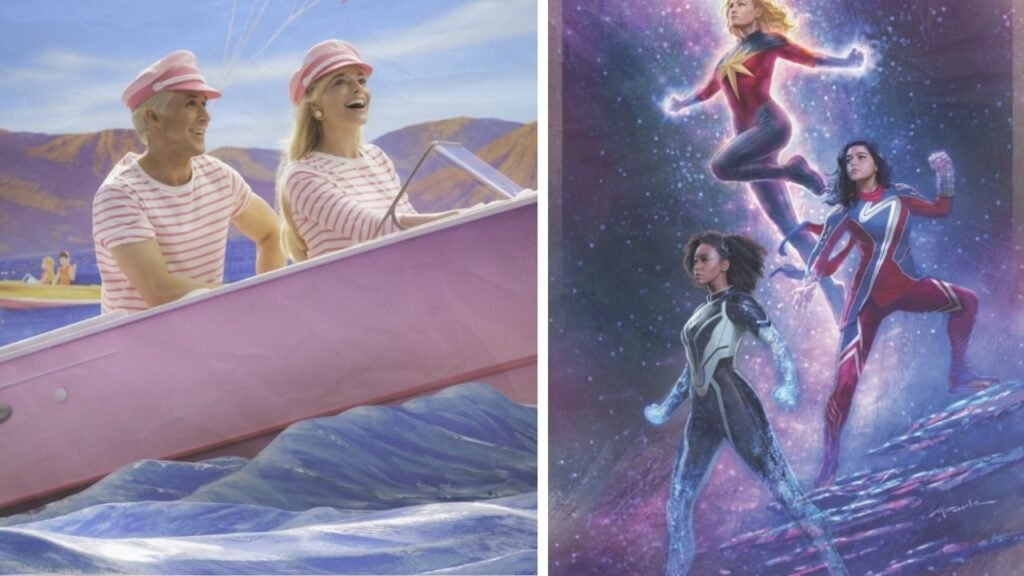
Within hours, it wasn’t just a trailer anymore; it was a cultural conversation. Some viewers saw genius marketing, others saw irony overload, others saw a bold tonal experiment. The discourse itself became part of the hype cycle. By the time the full trailer arrived, expectations had already split into camps.
Now contrast that with The Marvels (2023). Despite being part of a massive franchise, its trailers struggled to generate sustained positive momentum online. Instead, social media discourse leaned heavily into fatigue narratives,“MCU decline,” “too many crossovers,” “no hype anymore.”
Even before release, the trailer wasn’t just being evaluated, it was being used as evidence for a broader cultural argument. That kind of framing is hard to escape once it takes hold.
Then there’s Dune: Part Two (2024). Its trailers did something different: they fueled reverence.
Every new cut was dissected for scale, cinematography, and sound design. Social media didn’t just react, it amplified awe. Shots of sandworms, Paul Atreides’ transformation, and the escalating conflict became viral moments on their own. The trailer wasn’t just marketing; it became proof of cinematic ambition.
This is where the modern shift becomes clear: social media doesn’t just react to trailers, it assigns meaning to them. And that meaning splits fast.
One side builds excitement. The other builds skepticism. A trailer for Indiana Jones and the Dial of Destiny (2023), for example, generated both nostalgia-driven anticipation and fatigue-driven doubt.
On one feed, it was “a legendary return.” On another, it was “another legacy sequel nobody asked for.” Both narratives spread simultaneously, reinforcing completely different expectations for the same footage.
TikTok accelerates this even further. Short clips of dramatic moments, awkward line deliveries, or visually striking shots are extracted from context and rebranded as standalone opinions.
A two-hour breakdown of a trailer doesn’t matter as much as a five-second clip that “feels off” or “looks incredible.” Emotion wins over structure. And once a narrative sticks, it becomes sticky.
A trailer can improve later in full context, but early social framing often lingers. That’s why studios now release “reaction-friendly” cuts, tease specific moments designed to go viral, and time drops around peak engagement windows. They are not just releasing trailers, they are releasing discussion triggers.
Because in today’s ecosystem, a trailer doesn’t wait for judgment. It gets judged immediately.
Trailer Metrics vs Real Success
On paper, everything looks measurable now. Trailer views. Likes. Trending rank. Comment volume. Reaction videos. Reposts. Engagement spikes within the first 24 hours. It creates the illusion that hype can be quantified with precision, that if something goes viral enough, success is basically guaranteed.
But the gap between attention and actual outcome is wider than most marketing dashboards admit.
Because a trailer going viral doesn’t automatically mean people will show up when it matters.
We’ve seen this play out repeatedly.
Morbius (2022) is the clearest modern example. Its trailers generated huge online visibility, not because of genuine excitement, but because of memes, irony, and internet joking culture. “It’s Morbin time” became a viral phrase completely detached from the film’s actual intent.
The trailer “succeeded” in attention metrics, but that attention didn’t translate into positive reception or sustained box office strength after opening buzz faded.
Then there’s Black Adam (2022). Its trailers performed strongly in terms of reach and awareness, boosted further by Dwayne Johnson’s global star power and aggressive promotional push.
The marketing cycle looked like a win, big numbers, big visibility, constant social presence. But once the film released, audience reception was more muted, and long-term box office momentum failed to match early hype. Visibility didn’t convert into lasting enthusiasm.
Even The Flash (2023) experienced this divide. Trailers drove significant discussion online, especially around legacy character appearances and multiverse teases. The reaction economy was strong, breakdowns, theories, nostalgia-driven excitement.
But that engagement didn’t fully carry into sustained theatrical success or stable public sentiment, as real-world reception became more complicated. On the other side, you have quieter cases like Everything Everywhere All at Once (2022). Its trailer performance was not massive by blockbuster standards.
It didn’t dominate trending charts or generate constant meme cycles during its early phase. But once released, word of mouth, critical acclaim, and audience connection turned it into a long-tail success story far beyond its initial visibility metrics.
That contrast is the core issue. Trailer metrics measure curiosity, not commitment.
A viral trailer often captures attention in the same way a headline captures a click, it proves interest exists, but not depth of interest. People watch trailers while scrolling. They like them while multitasking. They share them because they are surprising, funny, nostalgic, or controversial.
None of that guarantees a ticket purchase, a subscription decision, or long-term engagement with the final product.
Meanwhile, some of the strongest-performing films historically have had relatively modest trailer buzz. Their success builds after release, not before it. The conversation shifts from “Did you see the trailer?” to “Did you actually watch it?”, and that second question is where real value begins.
Studios increasingly know this tension exists. That’s why marketing teams now chase two separate goals: viral awareness and conversion. One fills timelines. The other fills seats.
And the two do not always align.
Because in the end, trailers live in the economy of attention. But films and shows live in the economy of follow-through. And those are not the same thing.
