
Every year, awards season pulls the same trick, and somehow, people still fall for it.
You’re told it’s about the best. The best performance. The best film. The best whatever. A clean, almost noble idea that talent rises, gets recognized, and walks away with a trophy. Simple. Fair. Earned.
Except… it’s not that simple. Not even close.
Because awards aren’t just won. They’re engineered. By the time you’re watching teary speeches and viral acceptance moments, the real work has already been done, months ago, behind closed doors, inside private screenings, carefully curated interviews, and industry events where “casual conversations” just happen to shape opinions.
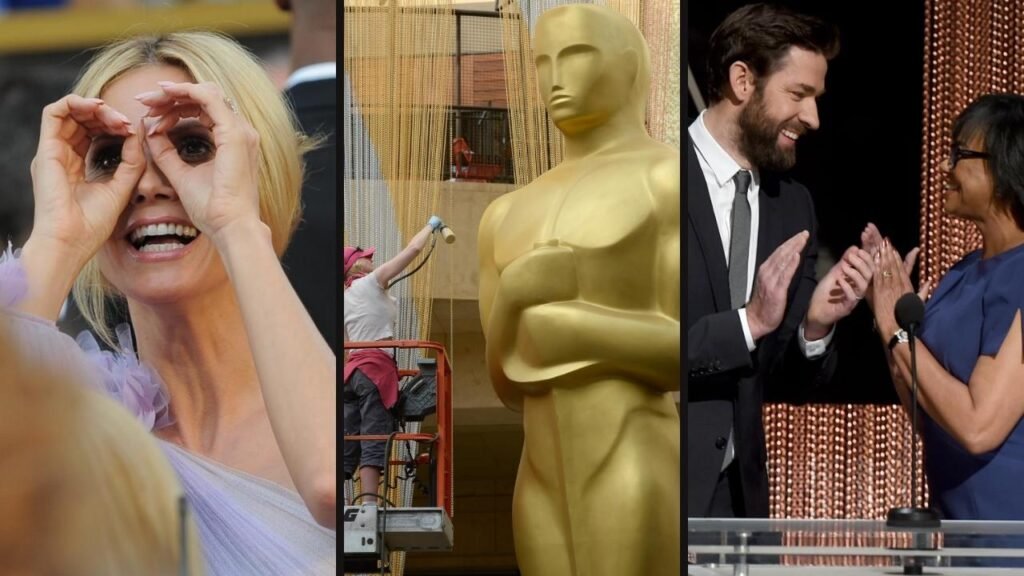
What looks like a spontaneous victory is often the final step of a long, calculated campaign.
And here’s where it gets interesting: talent still matters, but only up to a point.
Most nominees are already good. Some are even great. But once everyone clears that bar, the race quietly shifts. It’s no longer just about who was the best, it becomes about who stayed visible, who built momentum at the right time, and who gave voters a story they could emotionally invest in.
Because voters aren’t robots scoring performances on a spreadsheet. They’re human. They respond to narratives. To buzz. To the feeling that they’re part of something important. And campaigns know this, so they don’t just sell a performance, they sell a reason to vote for it.
That’s why you’ll suddenly see a film everywhere.
Why one actor becomes “inevitable.” Why another, equally deserving, quietly disappears from the conversation. It’s not random. It’s strategy doing exactly what it’s designed to do: shape perception until it feels like truth.
Think of awards season less like a fair competition and more like a high-stakes PR chess game. Every move, festival premieres, interviews, critic praise, even social media moments, is part of a bigger play. Some campaigns go loud. Others go surgical. But none of it is accidental.
And that’s the illusion.
On the surface, it’s all glamour, celebration, and artistic recognition. Underneath, it’s timing, positioning, and influence working overtime. The magic is real, but so is the machinery making sure you see it a certain way.
Once you start noticing it, you can’t unsee it. And suddenly, the question changes from “Who deserves to win?” to something a lot more interesting: “Who ran the smartest campaign?”
The “For Your Consideration” Machine
If awards season is a game, then “For Your Consideration”, or FYC, is the part where subtlety quietly dies.
This is where campaigns stop whispering and start showing up everywhere. You’re reading a trade magazine? FYC ad. Scrolling online? FYC banner. Driving past a billboard in LA or New York? Same face, same film, same message, please consider this. Over and over again until it stops feeling like promotion and starts feeling like fact.
And that’s not accidental. It’s psychological.
Repetition breeds familiarity. Familiarity breeds comfort. And comfort, especially for busy industry voters who are watching dozens of films, can easily turn into preference. Not because something is objectively better, but because it feels more present, more important, more inescapable.
But the real game isn’t just visibility, it’s prestige placement.
Where you show up matters just as much as how often. Full-page spreads in industry bibles. Prime digital slots during peak voting windows. Clean, elegant ads that don’t scream—they signal. The message isn’t just “watch this,” it’s “this matters.”
Then come the events, the part that looks classy on the surface but is doing quiet, heavy lifting underneath.
Exclusive screenings. Invite-only Q&As. Carefully moderated conversations with actors and directors who know exactly how to frame their work, passionate, thoughtful, just vulnerable enough to feel real. These aren’t random interactions; they’re controlled environments designed to deepen emotional connection. You’re not just watching a performance anymore—you’re meeting the person behind it, understanding the struggle, the intention, the story.
And once that connection is made? It sticks.
Because when voting time comes, people don’t just remember what they watched—they remember how it made them feel, and how it was presented to them. The polished ad, the thoughtful Q&A, the sense that this film wasn’t just another contender—it was an experience they were meant to value.
Even private screenings play their role. Smaller rooms, curated audiences, the illusion of exclusivity. It feels special. And anything that feels special instantly carries more weight in the mind of a voter.
Put it all together, and the FYC machine does something quietly powerful: it turns contenders into constants.
Not by forcing voters to choose, but by making sure one option feels impossible to ignore.
Because in a crowded field of “great,” sometimes the winner isn’t the one that stands tallest.
It’s the one you simply saw, and felt, the most.
The Power of Narrative: Selling a Story, Not Just a Performance
Here’s the part awards campaigns understand better than audiences ever will:
People don’t just vote for performances. They vote for stories they can feel good about choosing.
Because at a certain level, everyone in the race is talented. Everyone delivered. Everyone is “deserving” in some way. So how do you tip the scale?
You don’t just show voters the work. You give them a narrative that makes their vote feel meaningful. And once that narrative clicks, it’s incredibly hard to shake.
Take the classic comeback arc. An actor who was once everywhere, then disappeared, struggled, got written off, and now returns with a performance that demands attention. Suddenly, the conversation isn’t just about how good they are. It becomes about resilience, redemption, and unfinished business. Voting for them feels like correcting a past mistake.
Then there’s the “it’s their time” storyline.
The industry loves this one. A respected actor who’s been around for years, consistently delivering, never quite winning. Over time, the narrative builds quietly: they’ve earned it. So when the right role comes along, it’s no longer just about that performance; it’s about recognizing a career. A vote becomes a form of acknowledgment, almost a thank-you note.
And then you have social relevance, arguably the most powerful narrative in the modern awards landscape.
If a film taps into larger conversations, politics, identity, cultural shifts, it instantly gains weight. Not just as entertainment, but as something that matters. Campaigns lean into this hard. Interviews highlight the message. Q&As steer toward impact. Suddenly, voting for that film or performance doesn’t just feel like a personal choice, it feels like a statement.
And here’s the key insight: none of this is accidental.
Studios and publicists don’t sit back and hope these narratives emerge; they build and reinforce them at every step. Press interviews aren’t random conversations; they’re guided. Talking points are aligned. Personal stories are emphasized in ways that connect emotionally but also frame the work in a specific light.
Even vulnerability can be strategic. Struggles, sacrifices, behind-the-scenes challenges, these details are shared not just to inform, but to humanize and anchor the performance in something deeper.
Because when a voter walks into that decision, they’re not just thinking,
“Who was the best?”
They’re thinking: Who moved me? Who feels important? Who represents something bigger than just this role?
And once a campaign successfully answers those questions, the performance stops being just a performance.
It becomes a story voters want to be part of. And that’s when the race quietly shifts, from judging talent to choosing meaning.
Lobbying Without Calling It Lobbying
This is the part awards bodies like to pretend doesn’t exist, and campaigns absolutely rely on.
No one’s officially “lobbying.” There are rules, guidelines, and polite boundaries about what you can and can’t do. But within those lines? There’s a whole world of influence happening quietly, constantly, and very intentionally.
Because at the end of the day, voters aren’t faceless judges. They’re people. And people are influenced by who they know, who they meet, and how they feel in those moments.
Enter the soft power circuit: networking events, private dinners, industry mixers that look casual on the surface but are anything but random. These spaces are curated. Guest lists are intentional. Seating arrangements can be strategic. The goal isn’t to pitch aggressively; it’s to create proximity.
A conversation here. A shared laugh there. A quick moment that turns a name on a ballot into a person you’ve actually connected with. And that shift? It matters more than most people realize.
Because when voting time comes, familiarity has weight. Not in an obvious, corrupt way—but in a very human one. If you’ve met someone, heard them speak, felt their passion up close, that experience lingers. It subtly separates them from the rest of the pack.
Behind all this are the real operators: agents and publicists.
They’re the ones mapping the room before anyone even walks into it. They know who matters, who influences whom, who’s undecided, who needs a nudge. They’re not just managing careers, they’re orchestrating access.
And they do it carefully. Too aggressive, and it backfires. Too passive, and you disappear. The skill is in making everything feel natural, even when it’s anything but. Then there’s personal outreach, the most delicate move on the board.
Within ethical boundaries, of course. No direct “vote for me” messages, that’s a line you don’t cross. But thoughtful conversations? Invitations? A well-timed interaction that reminds someone of the work, the effort, the person behind it? Completely fair game.
It’s not about pressure. It’s about presence.
And that’s the uncomfortable truth of it all: awards aren’t decided in isolation.
They’re shaped in rooms where relationships already exist. Where familiarity, respect, and even subtle emotional bias can tip decisions that, on paper, should be purely about merit.
Which doesn’t mean the winners don’t deserve it. It just means that in a race where everyone is talented, the one who feels closest often pulls ahead.
Critics, Guilds, and Momentum Building
If awards season had a secret currency, it wouldn’t be talent—it would be momentum.
Because once something starts winning, it doesn’t just win. It starts to feel inevitable.
And that feeling? It’s manufactured step by step.
It usually begins with critics’ awards, the early noise. These drops come fast and fragmented: regional critics groups, film circles, online associations. On their own, they might not seem like a big deal. But collectively, they do something powerful—they plant the first idea of who’s “leading.”
You’ll start seeing headlines stack up. One win becomes three. Three becomes seven. Suddenly, a performance or film isn’t just good, it’s being talked about as the one to beat.
And once that label sticks, perception starts doing half the work.
Then come the guild awards, and this is where things get serious.
The Screen Actors Guild, Directors Guild, Producers Guild, these aren’t just random industry groups. They overlap heavily with actual awards voters. Same ecosystem, same people, same tastes. So when something wins here, it’s not just recognition, it’s data.
Campaigns watch this closely. So do voters. Because now the question shifts again. It’s no longer “Who might win?” It becomes “Wait… is this already decided?”
And that’s where the domino effect kicks in.
Once a contender builds enough momentum, every new win doesn’t just add to the total—it reinforces the narrative. It tells voters, again and again, this is the right choice. Not in a loud, forceful way, but in a steady, accumulating rhythm.
No one wants to feel like they missed something obvious. No one wants to vote against what’s clearly becoming the consensus, especially in an industry where being “in sync” matters.
So momentum turns into safety. Safety turns into alignment. Alignment turns into… inevitability. And here’s the twist: by the time the final awards roll around, the race often feels over before it even happens.
You’ll hear it in the way people talk:
“Locked.”
“Sweeping.”
“Unstoppable.”
That language doesn’t just describe the outcome, it shapes it. Because once enough people believe something is going to win, they start voting like it already has. That’s how momentum works. It doesn’t just reflect success. It creates it.
The Money Behind the Magic
Let’s drop the illusion for a second, awards season isn’t just emotional, strategic, or political. It’s expensive. Like, seriously expensive.
By the time a film is deep into the race, the campaign behind it can easily run into the millions. Not production budget. Not marketing for audiences. This is just for awards positioning. Separate spend, separate strategy, same end goal: win something that boosts prestige, and eventually, profit.
Because that’s the part people don’t always connect, awards aren’t just about validation. They’re assets.
A win or even a nomination can revive box office numbers, push streaming deals higher, extend theatrical runs, and elevate everyone involved. That little gold statue? It translates into very real money. So studios don’t spend blindly, they invest. But here’s where things get uneven.
Major studios and big streaming platforms walk into awards season with deep pockets. They can afford saturation, ads everywhere, constant events, endless screenings, and top-tier publicists working full throttle. They don’t just enter the race, they dominate the space around it.
Smaller studios? They have to be sharper. More selective. They can’t outspend, so they try to outmaneuver, targeted campaigns, strategic timing, leaning heavily on critical acclaim or breakout narratives. Sometimes it works. Often, they just get drowned out.
Because visibility costs money. And the more you have, the louder, and more persistent, you can be.
Then there’s where the money actually goes, which is more calculated than flashy.
Sure, there are billboards and magazine spreads, but a huge chunk is spent on access and experience. Hosting screenings in the right places. Organizing Q&As that feel exclusive but impactful. Flying talent to key events. Maintaining a constant presence during voting windows.
Even the timing of ads, when they appear, how frequently, and where is optimized down to the detail. It’s not about throwing money everywhere. It’s about placing it exactly where it influences perception the most.
And here’s the uncomfortable truth: this financial muscle doesn’t guarantee a win, but it massively increases your chances of staying in the conversation.
Because in a crowded field, disappearing is the worst thing that can happen to a contender.
So money steps in to make sure that doesn’t happen. Which brings everything back to the bigger picture: awards may celebrate art, but the path to that stage is paved with strategy, access, and serious financial backing.
The magic is real. But it’s also very, very well-funded.
Category Placement and Strategic Positioning
Here’s where the game stops pretending to be pure and starts getting… tactical. Because sometimes, winning isn’t about being the best overall. It’s about being the best in the room you chose to enter. And yes, ” choose ” is the keyword.
One of the most common (and quietly accepted) strategies in awards campaigns is category placement. On paper, categories are straightforward: lead roles go here, supporting roles go there. In reality? It’s a lot more flexible than it sounds.
Studios and campaign teams look at a performance and ask a very simple question:
Where can this win? That’s how you end up with performances that clearly feel like leads being pushed as supporting. Not because they belong there, but because the competition is thinner. Less crowded. More winnable.
And voters? They usually go along with it.
Because once a narrative is set, once ads, interviews, and campaigns consistently frame a performance a certain way, it becomes easier to accept that framing than question it. The category starts to feel correct, even if it’s strategically chosen. Then there’s genre bias, which plays a huge role in positioning.
Awards bodies have preferences. Historically, they lean toward serious, dramatic, “important” films. That means if you’re part of a comedy, a horror film, or a big-budget blockbuster, you’re already fighting an uphill battle. So what do campaigns do? They adjust the angle.
A comedy becomes a “character study.”
A genre film becomes “social commentary.”
A blockbuster performance gets reframed as “emotionally transformative.”
It’s not about changing the work, it’s about reframing how it’s perceived so it fits what voters traditionally reward. And then comes the most strategic move of all: avoiding competition.
Campaigns are hyper-aware of who else is in the race. If one category is stacked with heavy hitters, there’s a quiet incentive to shift lanes, move a contender into a space where the path is clearer.
It’s not announced. It’s not framed as avoidance. It’s just… positioning. But the impact is real. Because in a system where multiple strong performances compete, even small shifts can completely change the outcome. A performance that might lose in one category could easily win in another, not because it got better, but because the battlefield changed.
And this is where strategy starts to blur into something else. Not cheating. Not breaking rules. But definitely bending the spirit of them. Because at this level, everyone is good. Everyone is worthy. So the edge doesn’t always come from the work itself. Sometimes, it comes from knowing exactly where to place it.
And once you see that, categories stop feeling like neutral divisions. They start looking like opportunities waiting to be exploited.
Do Awards Still Matter in the Streaming Era?
For something that’s constantly being questioned, awards have a funny way of refusing to become irrelevant.
Because on paper, the system feels… outdated. You’ve got a relatively small group of industry insiders deciding what counts as “the best,” while millions of viewers worldwide are watching, reacting, and forming their own opinions in real time. The gap between who votes and who watches has never been wider.
And then streaming showed up, and made that gap impossible to ignore. Platforms don’t play by the old rules. They don’t rely on box office. They don’t need theatrical runs to prove value. What they do have is data, reach, and control over visibility on a global scale. So when they enter awards season, they don’t just participate—they reshape how campaigns work.
Instead of relying purely on traditional routes, streaming campaigns operate on two fronts at once. There’s the classic industry push, screenings, FYC ads, insider buzz. But layered on top is something older studios never had at this scale: direct access to audiences.
A film can drop on a platform and instantly become a global conversation. Trending lists, algorithmic recommendations, social media spillover, it all feeds into perception. Suddenly, a contender isn’t just “respected” within the industry, it’s seen, discussed, and validated by millions.
And that changes the tone of the race.
Because now there’s tension between prestige and popularity. Awards bodies have traditionally leaned toward curated taste, films that feel important, artistic, sometimes even niche. But streaming brings in projects that are widely watched, culturally dominant, impossible to ignore. Not always the most “awards-friendly,” but undeniably impactful.
So what happens?
Campaigns adapt.
Streaming platforms learn to speak both languages. They package their biggest titles with prestige framing, festival runs, critical acclaim, carefully shaped narratives, while still leveraging their massive audience reach as proof of relevance.
Meanwhile, traditional studios are forced to keep up, blending old-school campaigning with digital visibility strategies they didn’t need before. The result is a system that’s evolving, but not disappearing.
Awards still matter, but maybe not in the way they used to. They’re no longer the sole authority on what’s “best.” Audiences don’t wait for validation anymore, they’ve already watched, judged, and moved on. But within the industry? Awards still carry weight. They still influence careers, deals, and long-term legacy.
So instead of losing importance, awards have shifted roles. They’re not just about recognition anymore. They’re about positioning in a world where attention is fragmented and constant. Which brings everything full circle.
The old system, campaigns, narratives, lobbying, money, it’s all still there. Just updated, expanded, and layered into a much bigger playing field. And maybe that’s the real answer.
Awards don’t need to be perfect to survive. They just need to stay relevant enough to be part of the conversation. And right now? They still are.
