
Lucasfilm is officially entering a sequel era, one not defined by characters, timelines, or trilogies, but by leadership. After more than a decade steering one of Hollywood’s most storied creative institutions, Kathleen Kennedy is stepping down as president of Lucasfilm. Her successor is Dave Filoni, long regarded by fans as the heir to George Lucas’ narrative sensibilities, with Lynwen Brennan rising alongside him to jointly guide the studio through its next chapter.
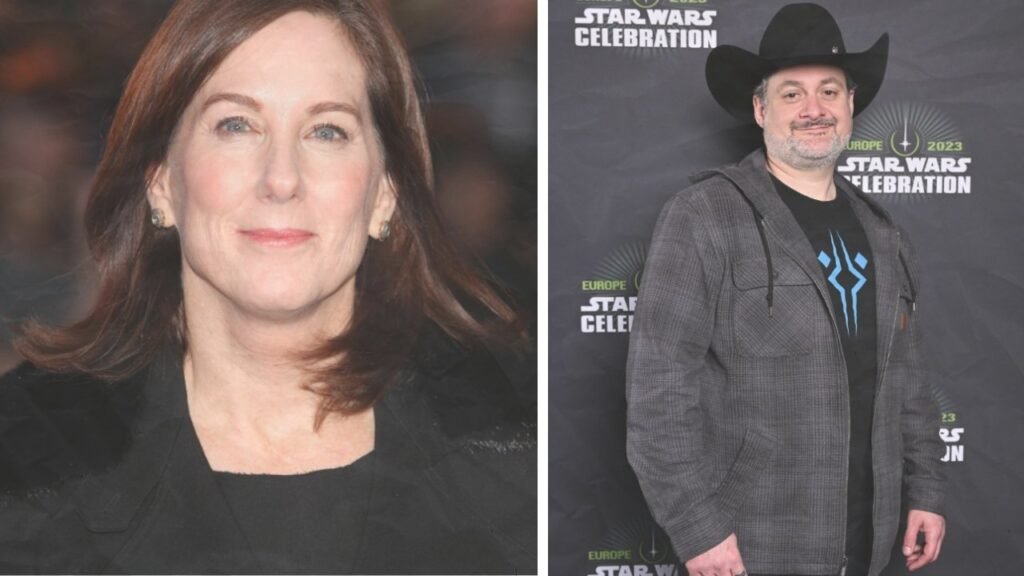
The announcement, long anticipated in entertainment circles, landed with both inevitability and symbolic weight. Kennedy’s presidency spanned triumphs, controversies, and reinventions; Filoni’s ascension feels less like a replacement and more like a generational handoff, quietly approved by the franchise’s founding lineage and enthusiastically endorsed by its most ardent followers.
A Leadership Handover Years in the Making
Filoni will serve as President and Chief Creative Officer, while Brennan assumes the role of Co-President, overseeing the studio’s business operations. It’s a structural split that mirrors Disney’s corporate strategy elsewhere: creatives empowered to imagine, strategists empowered to execute.
For Filoni, the appointment carries dramatic symmetry. He joined Lucasfilm in 2005 to help build its animation division under the direct mentorship of George Lucas, co-architecting The Clone Wars and later expanding the mythology through Rebels, The Mandalorian, and Ahsoka. His imprint on modern Star Wars, its iconography, lore, and serialized storytelling arguably rivals any creative figure since Lucas himself. The promotion formalizes a reality fans have recognized for years: Filoni has become the narrative conscience of the franchise.
Brennan, meanwhile, brings the grounded counterweight. Her Lucasfilm tenure began at Industrial Light & Magic in the late 1990s, where she rose throughout a period of massive technological transformation. She navigated the shift from analog to digital, from practical to CG, and from feature isolation to shared pipeline collaboration. Her leadership later expanded into Lucasfilm’s business strategy, where she oversaw operational pivots into streaming and global production without sacrificing the studio’s identity as a technical innovator. Brennan represents the institutional memory necessary to steer a complex legacy brand through modern market pressures.
Together, Filoni and Brennan embody a duality Lucasfilm has always wrestled with: the tension between myth and machinery, between storytelling and scalability, between fans and the fundamental economics of modern Hollywood.
Kathleen Kennedy’s Era: A Legacy of Reinvention, Debate, and Unquestionable Impact
Kennedy’s departure marks the end of an era that reshaped Lucasfilm more profoundly than any moment since its founding. When Disney purchased the company in 2012, Star Wars was a dormant theatrical property with no immediate future beyond nostalgic reverence. Kennedy revived it as an active cultural engine.
Her tenure carried contradictions that defined modern blockbuster filmmaking. On one hand, Lucasfilm under Kennedy delivered billion-dollar franchises, introduced new generations to galactic icons, launched the studio’s first standalone features, expanded the imprint of Indiana Jones, and engineered a streaming renaissance that fundamentally altered how Star Wars stories are consumed.
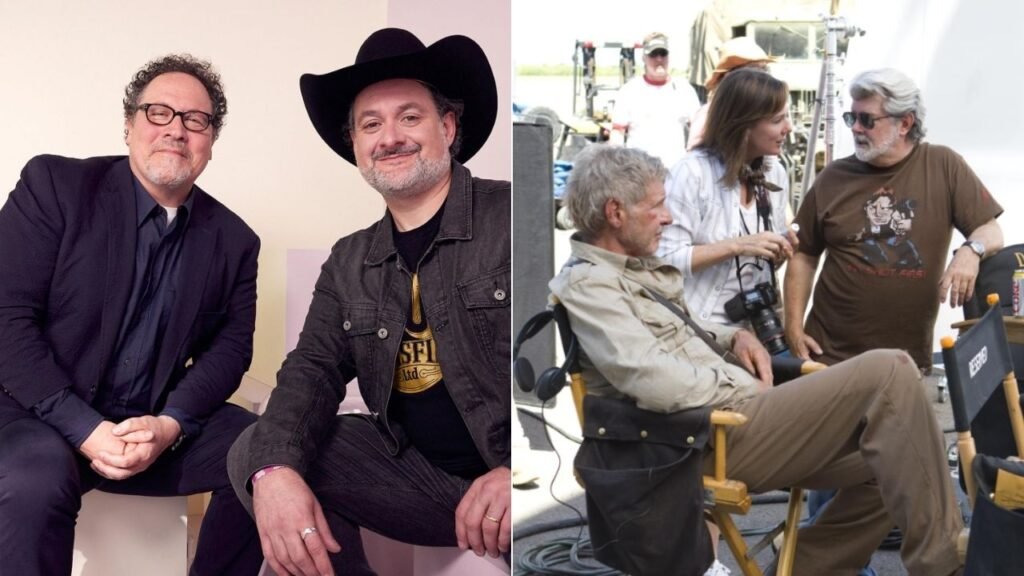
On the other hand, it endured abrupt filmmaker exits, tonal disputes, creative resets, and the weight of a fandom that remains uniquely demanding. The sequel trilogy brought enormous financial success yet fractured the community; Solo became a case study in production volatility; Rogue One survived upheaval to emerge as a critical triumph; The Mandalorian restored goodwill on a scale no analyst predicted.
The narrative of Kennedy’s presidency often gets flattened into binaries: success versus failure, nostalgia versus experimentation, legacy versus innovation, but the real story is far more complicated. She governed Star Wars through the most transformative decade in Hollywood history: the rise of streaming, the collapse of theatrical certainty, the acceleration of franchise economies, and a shifting media landscape where audiences expect both content abundance and canon coherence.
It is easy to forget how rare it is for a studio head to make profound creative calls while also managing the industrial machinery beneath them. Kennedy did both. Few figures have shaped as many modern franchises; fewer still can claim responsibility for shepherding characters so woven into global pop culture that they function as generational myth.
Why the Transition Matters Now
Industry observers had been waiting for Lucasfilm’s next act long before it was formally announced. The studio intentionally slowed its theatrical ambitions after The Rise of Skywalker and resisted public declarations of future release slates. Development entered a kind of suspended animation, not because the well was dry, but because succession politics demanded clarity before creative plans could accelerate.
This is the silent truth behind the transition: Star Wars thrives on momentum, and momentum requires decisiveness. Filoni’s appointment returns Lucasfilm to a forward-motion posture. His filmmaking rhythm is faster, his narrative strategy serialized, and his worldview rooted in mythic continuity rather than ad-hoc reinvention.
Whether fans consider this a renaissance or a repetition will depend on execution. Filoni’s affinity for lore, witches, clans, and cosmic philosophies delights the dedicated but confounds the casual. His storytelling is patient and cumulative, an inheritance from animation that sometimes challenges live-action’s scale and pacing. Yet it is precisely this long-form discipline that could restore cohesion to a franchise that has, at times, indulged in experimentation without equilibrium.
The Road Ahead: Films, Streaming, and Identity
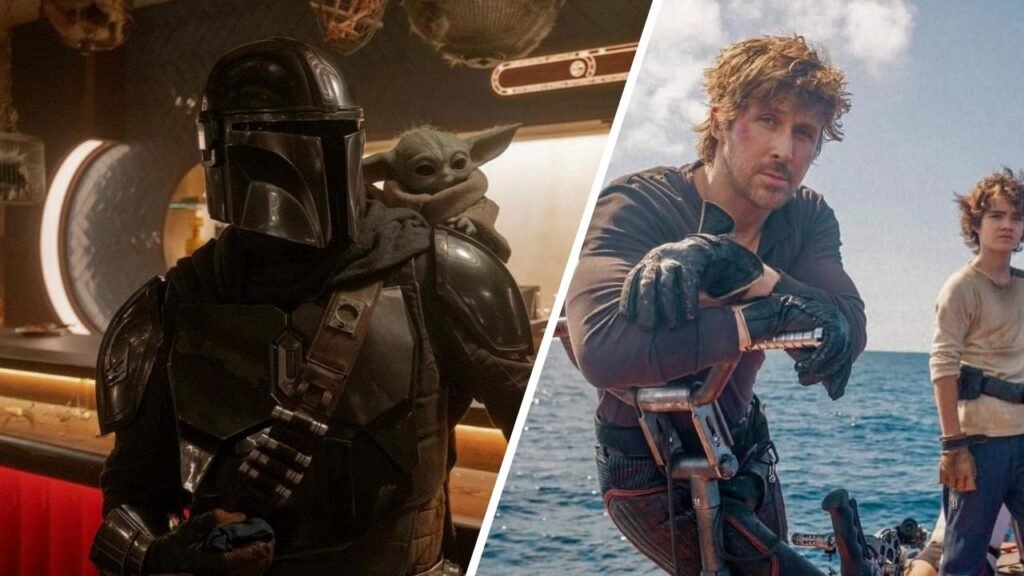
For the first time in half a decade, the theatrical future of Star Wars is tangible rather than hypothetical. The Mandalorian and Grogu will arrive in May 2026, with Shawn Levy’s Starfighter following in 2027. This marks a return to cinema for the franchise—and a test for whether streaming success can translate back to the big screen.
Streaming remains a strategic pillar. Ahsoka is deep into production on Season 2, and future chapters in the Mando-verse remain inevitable so long as audience appetite persists. The more existential question is how tightly Lucasfilm intends to braid its timelines together. Will Filoni pursue a Marvel-style interconnectivity, or return to Lucas’s anthological approach? Both models have fervent advocates.
Kennedy’s departure does not sever her influence. She will continue to produce films both within and beyond Lucasfilm, and her career has historically proven that she rarely exits a stage without entering a larger one.
Passing the Torch Without Burning the Past
There is remarkably little bitterness in this transition, at least publicly. Bob Iger and Alan Bergman have framed Kennedy’s exit as celebratory rather than corrective. Filoni himself invoked reverence, not rivalry, speaking openly about Kennedy’s expansion of the Star Wars universe and crediting both Kennedy and Lucas for shaping his artistic sensibilities.
If Hollywood loves drama, the Lucasfilm story has decided at least this time to play out as mythic renewal rather than palace intrigue. It is in keeping with Star Wars’ own thematic DNA: generational mentorship, apprenticeship fulfilled, legacy transposed rather than discarded.
A Franchise Not Just Continuing, But Evolving
Ultimately, this moment is not about Kennedy stepping down, nor about Filoni stepping up, but about Lucasfilm confronting its future with intentionality. Since 1977, the studio has oscillated between reinvention and remembrance. Now, with Brennan ensuring industrial continuity and Filoni carrying the narrative flame, Lucasfilm possesses a rare balance of institutional intelligence and creative authorship.
The Star Wars galaxy has always belonged to dreamers, first to Lucas, then to Kennedy, and now to Filoni. The question is no longer whether there will be more Star Wars, but what kind of Star Wars it will be. After years of speculation, the studio finally feels like it is accelerating again, not drifting.
For a franchise built on the promise of hope, that may be the most important development of all.
