
Adam Sandler is teaming up once again with a familiar face. The actor is set to reunite with Dustin Hoffman for Netflix’s upcoming remake of the acclaimed 2001 French drama Time Out, a character-driven thriller about identity, deception, and the crushing pressure of professional expectations.
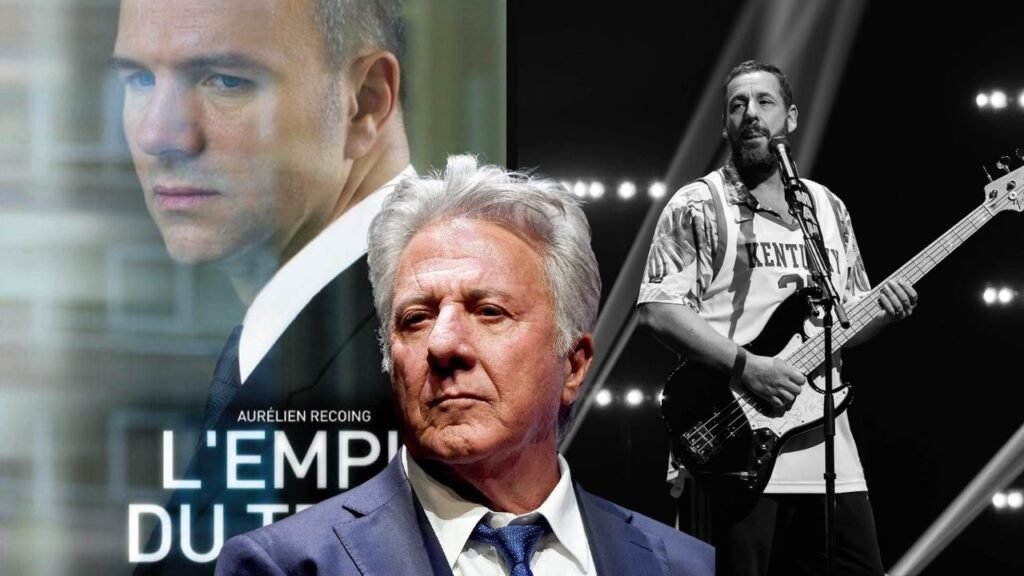
The project will mark the latest collaboration between the two performers, who previously shared the screen in The Meyerowitz Stories (New and Selected). That film earned strong reviews for its ensemble cast and emotional weight, and this new venture looks poised to lean even further into dramatic territory.
A Lie That Spirals Out of Control
Based on the original film by Laurent Cantet, Time Out follows Vincent, a man who has quietly lost his long-time consulting job. Rather than confess the truth to his wife, Muriel, and their three children, he continues to leave home each morning pretending to head to meetings and business trips.
What begins as a desperate attempt to buy time soon metastasizes into something far darker.
To keep up appearances, Vincent fabricates a prestigious new position in Geneva. The daily act of maintaining the illusion becomes a job in itself. As weeks pass, he falls deeper into a maze of lies, shady investment schemes, and betrayals involving the very friends who trust him most. All the while, the emotional walls close in, from the expectations of his community to the suffocating sense that a person’s worth is defined entirely by their career.
In the remake, Sandler will portray Vincent, a role that demands both vulnerability and
mounting panic as the character’s carefully constructed fiction begins to collapse.
Hoffman to Play Vincent’s Father
Hoffman is expected to play Vincent’s father, a figure described as carrying an overbearing desire to see his son succeed. The dynamic adds another layer of pressure to Vincent’s predicament, reinforcing the generational weight behind his need to appear professionally secure.
The part gives Hoffman rich dramatic terrain, the kind of emotionally complex material that has defined much of his celebrated career.

The adaptation comes from filmmaker Scott Cooper, who both wrote the screenplay and will direct. Cooper is known for character-focused dramas, and his involvement signals a grounded, performance-forward approach rather than a glossy thriller.
Veteran producer Jon Kilik is attached to produce.
Interestingly, Christian Bale had originally been linked to the lead role during earlier stages of development before Sandler ultimately stepped in.
Filming is scheduled to begin this spring in Vancouver, a city that has frequently doubled for international locations in major productions. With Vincent’s invented job rooted in European business travel, the setting provides flexibility for the story’s shifting geography.
Another Big Swing for Sandler and Hoffman’s Decorated Legacy
Sandler has increasingly alternated between broad comedies and prestige dramas, and Time Out continues that balancing act.
Recently, he headlined Happy Gilmore 2 for Netflix, revisiting one of his most beloved characters. He also starred opposite George Clooney in the comedy-drama Jay Kelly, a performance that brought him awards attention, including a Golden Globe nomination.
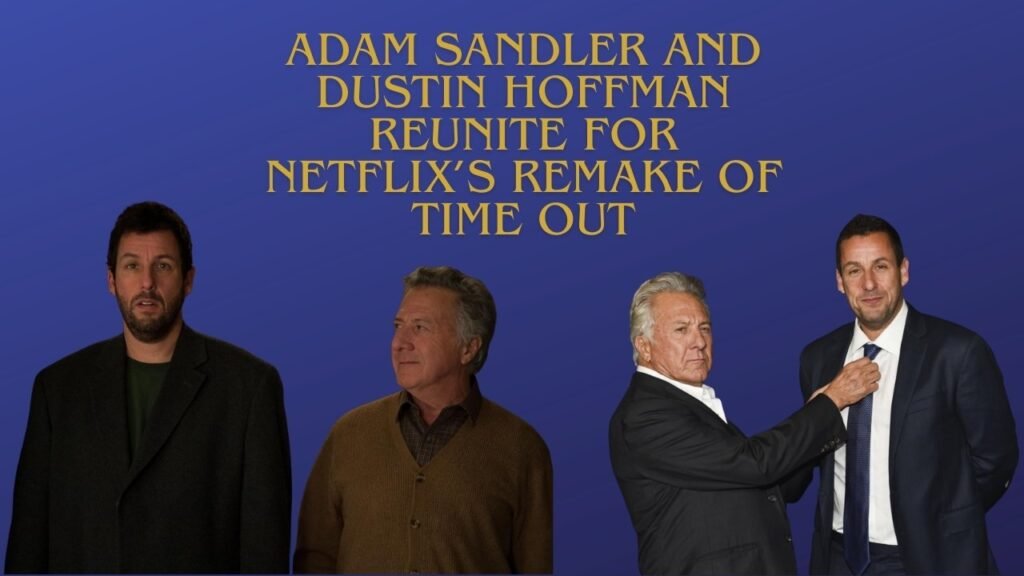
Taking on Vincent may offer Sandler one of his most emotionally demanding roles yet, a slow-burning unraveling that hinges almost entirely on internal conflict.
Hoffman, meanwhile, remains one of the most honored actors of his generation. He is a two-time Academy Award winner for Kramer vs. Kramer and Rain Man, with numerous additional nominations across the Oscars, Emmys, and Golden Globes.
He most recently appeared in Tuner, which premiered last summer at the Telluride Film Festival.
A Proven Pairing
When Sandler and Hoffman previously worked together on The Meyerowitz Stories, critics singled out the uneasy father-son energy as one of the film’s strengths. Time Out appears ready to tap into similar territory, though within a far more suspenseful framework.
If the adaptation captures even a fraction of the emotional intensity of Cantet’s original, audiences could be in for a gripping examination of pride, shame, and the terrifying lengths people will go to protect the image of a stable life.
