
Celebrity success is often surprisingly quiet. A star can win awards, launch a hit project, donate millions to charity, or build a business empire and receive a few days of positive coverage before the story fades.
But let the same celebrity become involved in a scandal, a public meltdown, an arrest, infidelity allegations, or a shocking confrontation, and suddenly the internet can’t look away. The story dominates headlines, social media feeds, podcasts, and reaction videos for weeks.
Consider a few famous examples. Britney Spears spent years making successful music and touring, but some of the most intense global attention came during periods of personal crisis.
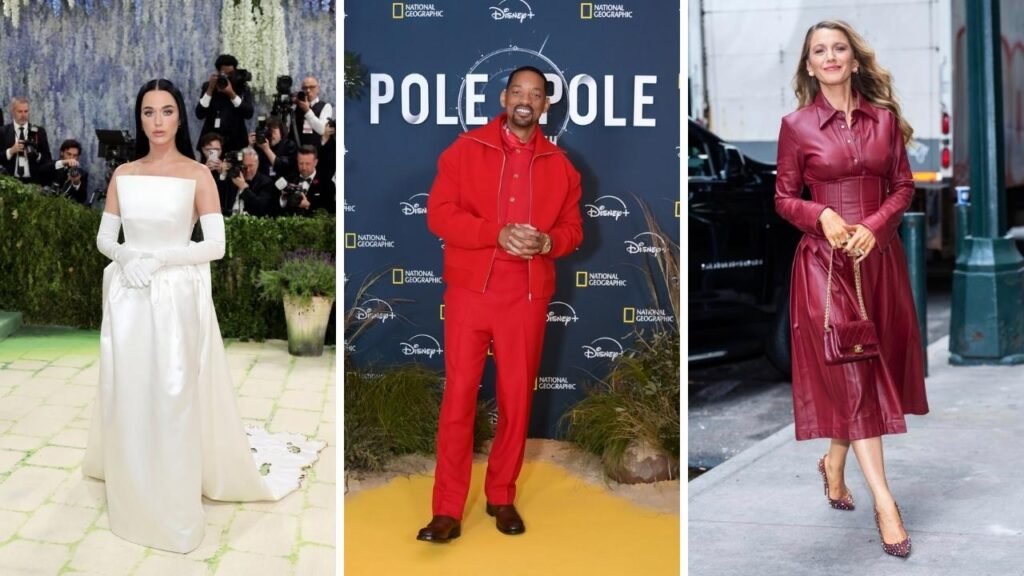
Tiger Woods was already one of the greatest golfers ever, yet his 2009 scandal became a cultural event far bigger than many of his victories. Will Smith had decades of blockbuster success, but the 2022 Oscars incident generated an explosion of discussion that overshadowed many of his achievements.
This raises a bigger question: Why does failure spread faster than success in celebrity culture? The answer isn’t just that people enjoy gossip. It sits at the intersection of human psychology, media economics, social media algorithms, and our complicated relationship with fame.
We’re naturally drawn to conflict, the media profits from attention, and modern platforms amplify the stories that provoke the strongest reactions. In celebrity culture, success may build a career, but controversy often captures the spotlight.
Humans Are Naturally Wired to Notice Negative Information
One of the biggest reasons celebrity downfalls spread so quickly has nothing to do with celebrities themselves.
It begins with a psychological tendency known as negativity bias, the human brain’s habit of paying more attention to threats, conflicts, and problems than positive developments.
From an evolutionary perspective, this made sense. Early humans who noticed danger were more likely to survive than those who ignored it. While modern audiences no longer need to watch for predators, our attention is still naturally drawn toward disruption rather than stability.
This creates a pattern that is easy to see in celebrity culture. Success often feels expected. Scandal feels urgent. Stability is unremarkable. Chaos demands attention.
Consider Tiger Woods. Before 2009, Woods had spent years dominating professional golf, winning major championships, and building one of the most successful careers in sports history.
Yet the media frenzy surrounding his personal scandal generated far more public conversation than many of his victories.
A similar pattern emerged with Will Smith. For decades, Smith was known as one of Hollywood’s most reliable stars, with blockbuster films, awards recognition, and a largely positive public image.
But a single moment at the Academy Awards became one of the defining entertainment stories of the year.
The same can be said for Martha Stewart. Her transformation into a lifestyle empire made her famous, but her legal troubles became an even bigger cultural spectacle.
Likewise, cyclist Lance Armstrong spent years being celebrated as an inspirational champion, only for the doping revelations to overshadow much of that legacy in the public imagination.
The pattern is remarkably consistent. A celebrity can spend ten years accumulating achievements, but one public mistake can generate more discussion than an entire decade of success.
Not because success lacks value, but because the human brain is naturally more alert to things going wrong than things going right. The media industry recognized this reality long before social media existed.
If audiences are instinctively drawn to conflict and controversy, then negative stories become incredibly effective at capturing attention, and attention has always been one of the most valuable commodities in entertainment.
A Celebrity Scandal Is Basically a Real-Life Drama Series
Part of what makes celebrity scandals so irresistible is that they often resemble the stories people already love to watch.
Most successful films, television shows, and novels follow a familiar structure: a central character faces conflict, relationships are tested, unexpected twists emerge, and the audience waits to see how everything ends.

Celebrity controversies frequently unfold in exactly the same way, except they happen in real life. Almost every major scandal contains the ingredients of a compelling narrative:
- A protagonist
- A conflict
- Supporting characters
- Plot twists and new revelations
- Public reactions and debate
- The possibility of redemption or downfall
The legal battle between Johnny Depp and Amber Heard is a clear example. What began as a legal dispute evolved into a global spectacle filled with testimony, competing narratives, social media analysis, and daily developments that kept audiences invested for months.
Many people followed the case less like a news story and more like an unfolding drama.
Similarly, the public controversies surrounding Kanye West have generated years of continuous attention because the story never feels complete. New interviews, business consequences, public responses, and career developments constantly add new chapters to the narrative.
This is what separates scandals from ordinary success stories. A celebrity releasing another successful movie or winning another award may be noteworthy, but the narrative is relatively straightforward.
The outcome is already clear: success continues.
Scandals, on the other hand, create uncertainty. Audiences want to know what happened, who is responsible, what comes next, and whether the celebrity can recover. They aren’t simply consuming information, they’re following a story.
And stories built around conflict have always been far more effective at holding attention than stories built around stability. That’s why celebrity controversies often dominate public conversation long after the initial event itself.
Celebrity Downfalls Make Ordinary People Feel Better About Themselves
Celebrities occupy a unique place in society. They are often seen as wealthier, more attractive, more successful, and more influential than the average person. While this can inspire admiration, it also creates distance.
Stars often appear to live in a world that feels completely separate from everyday life. That is why celebrity downfalls can have such a powerful effect on public attention.
When a famous person stumbles, the image of perfection suddenly cracks. For a moment, the superstar looks human. The gap between celebrity and audience shrinks, making the person seem more relatable than they did during years of uninterrupted success.
This helps explain why scandals involving figures like Lance Armstrong or Elizabeth Holmes attracted such enormous interest. Both had been presented as exceptional success stories, Armstrong as a sporting hero and Holmes as a visionary entrepreneur.
When those narratives collapsed, the public wasn’t just reacting to the controversy itself. They were witnessing the fall of individuals who had seemed almost untouchable.
Psychologists sometimes use the German word ‘schadenfreude’ to describe the satisfaction people feel when someone else’s misfortune occurs.
In celebrity culture, that feeling can become particularly strong because the subjects are people who appear to have everything. Seeing a powerful figure make mistakes can provide a sense of reassurance that success does not place someone above ordinary human flaws.
This doesn’t mean audiences are inherently cruel. More often, celebrity downfalls serve as a reminder that fame, wealth, and status do not eliminate personal struggles, poor decisions, or consequences.
Ironically, the very moments that damage a celebrity’s image can also make them feel more relatable than ever before.
And because these stories tap into powerful emotions, curiosity, judgment, empathy, and sometimes satisfaction, they become exactly the kind of content that spreads rapidly across news outlets and social media platforms.
Social Media and Algorithms Turned Celebrity Failures Into Global Spectacles
Celebrity scandals have always attracted attention, but social media fundamentally changed their scale and speed.
Before platforms like X, TikTok, YouTube, and Instagram, most entertainment news passed through editors, television networks, and newspapers. Stories were filtered through traditional media gatekeepers, and public reactions spread relatively slowly.
Today, everyone can participate. Every user can react, comment, share, create memes, post theories, upload reaction videos, or join online debates. A celebrity controversy is no longer something people simply read about, it becomes something they actively engage with.
The 2022 Oscars incident involving Will Smith is a perfect example. Within minutes, clips of the moment were circulating across every major platform. What might once have been a brief entertainment headline became a global online event fueled by endless discussion, memes, analysis videos, and think pieces.
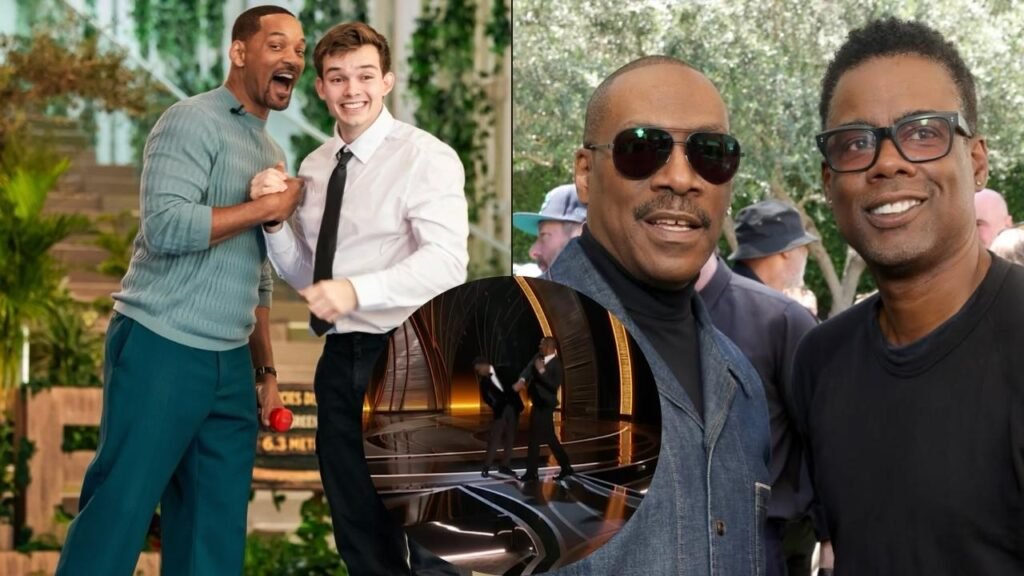
A similar pattern emerged during the controversies surrounding Logan Paul. The story didn’t live solely in news articles. It expanded across YouTube commentaries, social media reactions, podcasts, and countless user-generated discussions that kept the controversy in public view long after the initial incident.
The same dynamic played out during the public backlash faced by Ellen DeGeneres. Reports about workplace culture quickly evolved into a much larger conversation involving former employees, celebrity interviews, online commentary, and public debates about reputation and accountability.
The reason these stories spread so aggressively lies partly in how modern platforms operate.
Social media algorithms are designed to maximize attention by measuring signals such as clicks, watch time, comments, shares, and overall engagement. Content that generates stronger emotional reactions tends to perform better under these systems.
A headline announcing that an actor donated millions to charity may receive positive responses, but a headline alleging shocking behavior is far more likely to provoke arguments, speculation, outrage, and repeated sharing.
The controversy keeps people talking, which keeps people engaged.
Importantly, platforms are not necessarily programmed to favor scandals. They are programmed to favor attention. The problem is that controversy often generates more attention than achievement.
As a result, celebrity failures gain a structural advantage in the digital age. What was once a news story can now become millions of posts, memes, reaction videos, and debates spread across the internet in real time.
Success may earn admiration, but controversy fuels engagement, and engagement is the currency modern platforms are built to maximize.
We Secretly Expect Celebrities to Fail
Celebrity culture is built on a contradiction. Audiences love celebrating successful people, yet they are often equally fascinated when those same people fall from grace.
We admire celebrities for their talent, achievements, and influence. At the same time, we scrutinize their behavior, question their authenticity, and look for signs that the public image might not match reality.
The result is a culture that simultaneously elevates stars and waits to see whether they can live up to the expectations placed upon them. The higher the pedestal, the more dramatic the fall.
This helps explain why the downfall of figures like Lance Armstrong generated such intense public interest. Armstrong wasn’t just a successful athlete; he was presented as an inspirational symbol of perseverance and triumph.
When the doping scandal emerged, it wasn’t simply a sports story, it was the collapse of a carefully constructed narrative.
A similar dynamic surrounded Elizabeth Holmes. For years, Holmes was celebrated as a revolutionary entrepreneur and one of Silicon Valley’s brightest stars. The revelation that the story was far more complicated attracted enormous attention because it challenged the public image people had been encouraged to believe.
In some cases, such as Harvey Weinstein, the downfall becomes even more significant because it exposes abuses of power that had remained hidden behind success and influence.
The story becomes about more than one individual, it becomes a reckoning for an entire industry. These cases reveal an uncomfortable truth about modern celebrity culture: many people have grown skeptical of perfection.
After decades of carefully managed public images, audiences often assume there is a flaw somewhere beneath the surface.
Every success story is celebrated, but it is also quietly tested. That doesn’t mean every celebrity is destined for scandal. However, in an era of constant media coverage and social media scrutiny, there is often an unspoken expectation that eventually the full story will emerge.
When it does, the revelation can become even more compelling than the success that came before it.
Redemption Stories, Human Nature, and Why We Can’t Look Away
Not every celebrity downfall ends in permanent disgrace. In many cases, the fall becomes the beginning of an entirely new story, one that audiences find even more compelling than the original success.
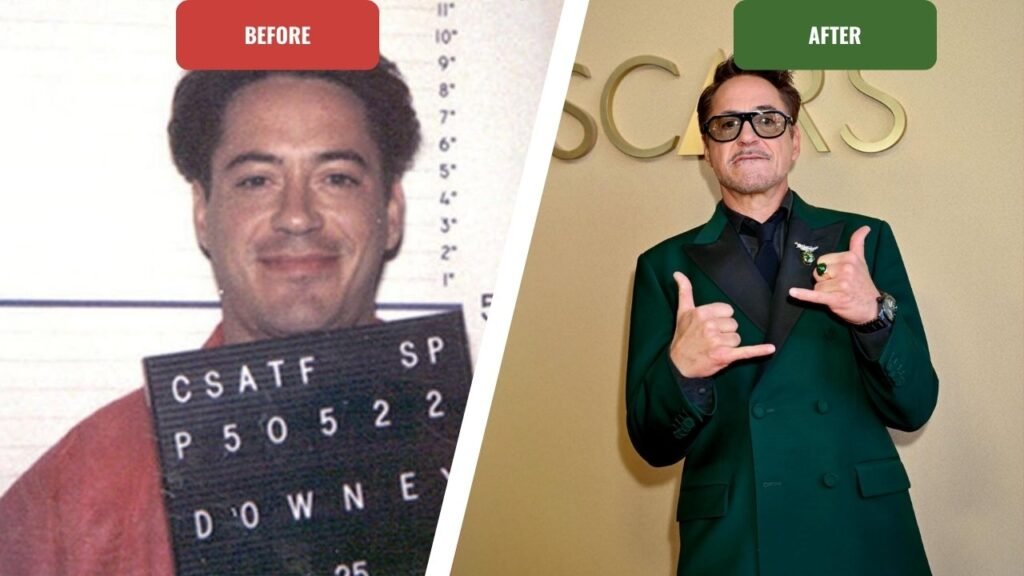
Consider Robert Downey Jr.. After years of legal troubles and substance abuse issues that threatened his career, he rebuilt his public image and eventually became one of the biggest stars in Hollywood through the Marvel era.
Likewise, Tiger Woods experienced a remarkable comeback when he won the 2019 Masters, a victory that carried far more emotional weight because it came after years of personal and professional setbacks.
Even the public conversation surrounding Britney Spears evolved from crisis and scrutiny to resilience and renewed public support.
These stories resonate because they contain elements people instinctively respond to: failure, growth, resilience, and transformation. In storytelling terms, redemption is often more satisfying than uninterrupted success.
A flawless rise may be impressive, but overcoming adversity feels human.
And that points to a larger truth about celebrity culture. The real story is not celebrity failure, it’s human nature.
Throughout this article, we’ve seen how negativity bias draws people toward conflict, how media companies profit from attention, how social media amplifies outrage, and how algorithms reward engagement.
But beneath all of those forces lies something deeper: people are naturally fascinated by status, conflict, triumph, and redemption. Celebrity scandals simply provide highly visible versions of those timeless themes.
In many ways, celebrity downfalls reveal less about the celebrities themselves than they do about the audiences watching them. The viral spread of scandals reflects how people process attention, power, morality, and storytelling.
We celebrate success, but we become emotionally invested when the story becomes complicated.
That is why celebrity downfalls often travel further than celebrity achievements. Success may build a celebrity, but downfall reveals what audiences truly pay attention to.
And in an age where algorithms compete for every second of human attention, that attention remains the most valuable currency of all.
